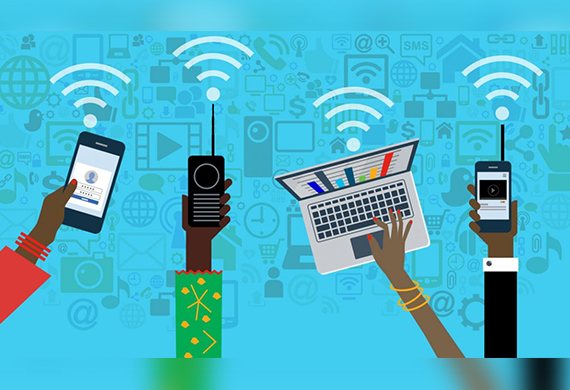

According to the “India Inequality Report 2022: Digital Divide”report, there is a significant disparity in access to digital services based on caste, financial status, and education, in addition to gender.
While the internet is a powerful tool that can be used for good, its full potential is unrealized because nearly half of the population is excluded. Women, rural dwellers, those with low levels of education, and those from lower castes were found to be the least likely to have access to the internet and other digital services, according to the study. While the gap between urban and rural access is closing, the study discovered that the digital divide between rich and poor is widening.
According to a research on India's digital divide released by the non-governmental organisation Oxfam, only 31% of women had a mobile phone by the end of 2021 compared to 61% of males.
Oxfam India stated that their research revealed that access to mobile phones is crucial to combating women's knowledge gaps, enhancing their independence in decision-making, and facilitating access to health care. It cited statistics from the private think tank Centre for Monitoring Indian Economy.
Only one-third of internet users in India are women, according to the "India Inequality Report 2022: Digital Divide" report, and the nation has the largest gender disparity in internet access in the Asia-Pacific region, at 40.4%. According to the survey, Indian women are 33% less likely than Indian men to use mobile internet services.
Women use a lower range of digital services (typically primarily voice and SMS), the survey stated, "limited by less expensive and sophisticated phones."
Along with gender, the survey shows alarming disparities in access to digital products and services across caste, wealth, and educational levels. In addition to using secondary analysis from the National Sample Survey, the report examined data from the household survey conducted by the Centre for Monitoring Indian Economy between January 2018 and December 2021.
Digital divide, according to Oxfam India Chief Executive Officer Amitabh Behar, "accentuates India's growing inequality."
Because it is more difficult for them to access public services like education and health care, those without smartphones and the internet become even more marginalised.
Poverty-related Digital Gap
Only 2.7% of Indian homes in the lowest 20% have access to a computer, while 8.9% have internet connectivity, according to the report, which used data from the National Sample Survey Office for 2017–18. In comparison, 50.5% of the top 20% of families have internet access and 27.6% of them have computers.
According to the report, 41% of kids who are in the wealthiest 10% have access to a computer with the internet. In the next 10% wealthiest kidss, the share falls to 16%, and in the third-richest decile, it drops to 10%.
Only 2% of the 10% of children with the lowest incomes have access to a computer with internet access.
Employment and Educational Disparities
According to the survey, just 39% of respondents with post-graduate or PhD degrees and none of the respondents without any formal education own computers. Only 11% of respondents without a college degree possessed a cell phone, compared to 76% of respondents with a post-graduate or PhD.
The report also highlighted a prior poll done in 2020 by Oxfam India, which found that 84% of instructors and 75% of parents in India reported difficulties with digital education.
According to the survey, 95% of permanent salaried workers have phones, compared to only 50% of the jobless, showing that access to digital services and employment level are related.
Digital Divide linked to Caste
In India, caste and the digital divide have been interlinked. The Scheduled Tribes and Scheduled Castes have the worst access to the internet and digital technology, according to a research by the Indian Council for Research on International Economic Relations.
According to the Oxfam research, between 2018 and 2021, the disparity in computer access between the general category and Scheduled Tribes was as much as 7 to 8%.
According to Oxfam, the number of individuals without computers in the general population and Other Backward Classes somewhat grew during the pandemic, despite the fact that the percentage of the population among Scheduled Castes and Scheduled Tribes has mainly stayed constant.
The study also discovered a relationship between socioeconomic position and the digital divide, with the least fortunate households having the lowest rates of internet access. The study comes to the conclusion that India's digital gap is a significant impediment to social and economic inclusion.
The report suggests that the government take actions to improve the most disadvantaged sections in society's access to the internet and digital technologies. Additionally, it urges more funding for initiatives to promote digital literacy.
The Union government and state governments have been urged by Oxfam India to ensure that everyone has access to Internet connectivity by making investments in digital infrastructure that will not only make the Internet more accessible and affordable but also work to make smartphones more widely available.
Current Issue
Most Viewed
- 1 Talented Indian Female Actors Who Also Moonlight as Successful Producers
- 2 7 Indian Female Podcasters You Must Know About
- 3 7 Powerful Independent Indian Women Journalists Who are Voices of Change
- 4 Ruchikaa Kapoor Sheikh: The Creative Mind Behind Netflix India's Popular Shows
- 5 7 Most Influential Women Educators India has had over the Years
- 6 11 Breakthrough Female Faces Ruling the Indian OTT Platforms
- 7 8 Timeless Female Indian Classical Dancers & their Legacy
- 8 Women's Health Startup HerMD Closing Doors Amid Industry Challenges
- 9 Real Meets Reel: A List of 11 Indian Movies based on Real Women
- 10 Rasha Hassan: A Visionary Leader On A Mission To Transform Dubai's Real Estate Landscape
- 11 5 Indian Women-led IPOs You Must Know About
- 12 11 of the Most Iconic 21st Century Women to become "The First Indian Woman"
- 13 India's 7 Funniest Women Stand-Up Comics You Must Follow
- 14 Aparna Purohit : Leading India's Most Popular OTT Platforms
- 15 How Leaders Can Balance Risk & Innovation in Today's Banking Landscape
- 16 Dr. K. Shilpi Reddy: Sculpting Healthier Futures For The Next Generation With Reforms In Obstetrics Care
- 17 Sylvia Dcosta: A Visionary Business Leader Pushing The Limits And Setting High Professional Standards
- 18 Top 5 All-Rounder Women Cricketers of India
- 19 How Tata AIA is Empowering Women with Insurance That Understands Their Needs


