
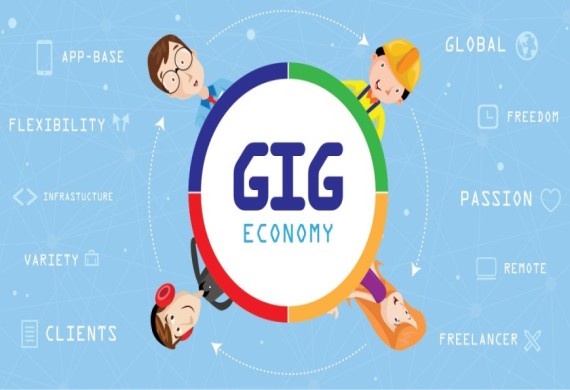

India’s Gig and Platform economy has experienced tremendous growth over the last few years. Read on to know how the NITI Aayog intends to bring more women to become a part of this booming industry to boost India's female labour force participation.
The NITI Aayog has recommended fiscal incentives like tax rebates or startup grants for businesses with around one-third of their workforce being made up of women and people with disabilities (PwDs)in an effort to encourage the participation of women in the gig economy.
"Fiscal incentives, such as tax rebates or starting grants, may be given to enterprises who offer employment prospects where women make up a sizable share of their workforce, say 30%, or more. In a paper titled "India's Booming Gig and Platform Economy," the NITI Aayog suggested that a platform with strong accessibility or a high level of PwD involvement may also receive financial incentives.
The study also stated that women are more likely to take up platform professions following their schooling and marriage, according to a survey done throughout urban centres in India.
According to the survey, India's female labour force participation has remained low, ranging from 16 to 23 percent over the past few years. In a similar vein, India's population of 2.11 to 10% of people with disabilities has a labour force participation rate of 36%. The research stated that "structural constraints including access to education and a lack of expertise have made it difficult for the two demographic groups to participate in the country's labour force."
Platform companies, on the other hand, offer flexibility and a choice of work to all workers in general, and women in particular, according to the report. This benefit is lacking in traditional employment sectors, making platform companies an appealing opportunity for women and people with disabilities.
According to the analysis, the gig economy employed more than 7.5 million people in 2020–21. In the following eight years, this number might increase to 23.5 million workers, accounting for 4.1% of all Indians' means of subsistence.
The survey states that at the moment, medium-skilled employment account for roughly 47% of gig work, high-skilled jobs for about 22%, and low-skilled jobs for around 31%. Platform and non-platform workers are the two primary categories of gig workers. Platform employees are individuals whose job is based on digital or online software platforms, whereas non-platform gig workers often get a casual salary and work either full- or part-time. Platform companies have opened up employment opportunities, however these have frequently been accompanied by low pay, unequal gender involvement, and little room for advancement within an organisation.
In addition to rewarding platforms that prioritise hiring women workers, the survey suggested that organisations have a higher percentage of female managers and supervisors to guarantee that communications with employees do not reinforce gender stereotypes. According to SakshiKhurana, a consultant with NitiAayog's skill development, labour, and employment vertical and a member of the research team for the report, "platforms may develop better infrastructure and work design, enhance skill development, asset ownership, access to digital skills and technology, undertake gender sensitization and accessibility awareness programmes for workers and their families."
According to the paper, employers should think about giving income support to workers as it would be a "vital step in providing certain minimum earnings and social security from income loss in the aftermath of uncertainty or irregularity in work," in order to encourage greater and equal involvement in the gig economy. Social security benefits could also be extended to workers in a partnership mode, as foreseen in the Code on Social Security, 2020, the report added. In addition to providing health coverage, it also stated that companies pay their employees' sick days.
Gig workers are frequently employed by organizations on a contractual basis; they are not regarded as employees. As a result, they frequently do not receive perks like paid sick and vacation time, housing and travel expenses, and provident fund savings, among other things, that an on-roll employee of the company could have.
The research advised businesses to implement old age or retirement plans, as well as additional insurance coverage for contingencies like injury sustained at work that could result in loss of job and income. As stated in the Code on Social Security, 2020, "Such plans and policies may be uniquely designed by a firm, in partnership with insurance companies, or could be designed and offered in collaboration with the government." According to the report, gig workers can also be helped in case of emergencies by a social security benefit from a corpus fund.
NitiAayog stated that financial solutions created especially for platform users and those looking to launch their own platforms might improve access to institutional finance.
“Venture capital funding, grants and loans from banks and other funding agencies should be provided to platform businesses of all sizes at the pre-revenue and early-revenue stages,” it said. Financial technology firms can be used to support the needs of people who are new to credit by offering cash flow-based loans to employees as opposed to loans based on collateral. “Special emphasis may be placed on access to formal credit for women and persons with disabilities,” it added.
Current Issue

Most Viewed
- 1 Talented Indian Female Actors Who Also Moonlight as Successful Producers
- 2 7 Indian Female Podcasters You Must Know About
- 3 7 Powerful Independent Indian Women Journalists Who are Voices of Change
- 4 Ruchikaa Kapoor Sheikh: The Creative Mind Behind Netflix India's Popular Shows
- 5 7 Most Influential Women Educators India has had over the Years
- 6 11 Breakthrough Female Faces Ruling the Indian OTT Platforms
- 7 8 Timeless Female Indian Classical Dancers & their Legacy
- 8 Women's Health Startup HerMD Closing Doors Amid Industry Challenges
- 9 Real Meets Reel: A List of 11 Indian Movies based on Real Women
- 10 Rasha Hassan: A Visionary Leader On A Mission To Transform Dubai's Real Estate Landscape
- 11 5 Indian Women-led IPOs You Must Know About
- 12 11 of the Most Iconic 21st Century Women to become "The First Indian Woman"
- 13 India's 7 Funniest Women Stand-Up Comics You Must Follow
- 14 Aparna Purohit : Leading India's Most Popular OTT Platforms
- 15 How Leaders Can Balance Risk & Innovation in Today's Banking Landscape
- 16 Dr. K. Shilpi Reddy: Sculpting Healthier Futures For The Next Generation With Reforms In Obstetrics Care
- 17 Sylvia Dcosta: A Visionary Business Leader Pushing The Limits And Setting High Professional Standards
- 18 Top 5 All-Rounder Women Cricketers of India
- 19 How Tata AIA is Empowering Women with Insurance That Understands Their Needs


