Leaders
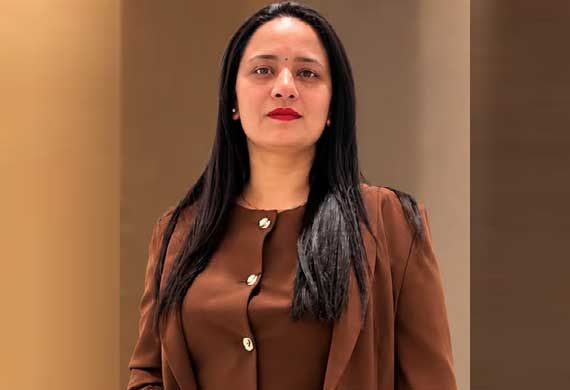

Education leaders today are operating at the intersection of academic excellence, technological change and evolving workforce expectations. Their role has moved beyond delivering curriculum to creating learning environments that encourage critical thinking, adaptability and responsible leadership. Particularly in management education, educators are expected to connect academic knowledge with industry realities while preparing students to navigate increasingly digital and people-centric workplaces. Bringing this perspective to management education is Dr. Akansha Gautam, Associate Professor, Program Head, Proctor Member and Senior Member of Program evaluation & review commitee at Tulas University.
Dr. Akansha Gautam’s academic journey, spanning a BBA, MBA in Human Resources, M.Com, UGC NET qualification and Ph.D. in Human Resources, reflects her commitment to continuous learning and transformation. Her doctoral research on transformational leadership, motivation and academicians’ performance has shaped her belief that effective education goes beyond knowledge transfer to developing responsible, independent thinkers.
This philosophy guides her teaching and mentoring approach. Dr. Gautam integrates case studies, simulations, experiential activities, industry interactions, contemporary HR practices and technology-enabled learning to connect academic concepts with practical realities. Beyond academic performance, she focuses on students’ personal and professional development. Her leadership approach centers on creating an ecosystem where students and faculty can learn, experiment, contribute and grow, combining academic rigor with people-centric development.
Dr. Akansha Gautam champions Ai-enabled, human-centric education, empowering future leaders through innovation, ethics, experiential learning, and transformational leadership
How have your experiences across different institutions shaped your evolution as an academic leader?
Every institution has added a different dimension to my professional journey. My early roles strengthened my understanding of teaching, student engagement and academic responsibility, while Jaipur National University and Mody University exposed me to diverse academic cultures and institutional systems. At Tulas University, my responsibilities expanded beyond the classroom into mentoring, academic coordination, quality initiatives and industry engagement. This transition taught me that academic leadership is less about designation and more about ownership, initiative and enabling others to grow. Across these experiences, adaptability, collaboration and continuous learning have remained central to my development as an academic leader.
How have your diverse responsibilities at Tulas University influenced your leadership approach?
I approach my responsibilities with one common objective: creating value for students, faculty, industry and the institution. While teaching remains central, my involvement in AIMA coordination, Management Development Programs, Program evaluation & review committee, Proctorial Board responsibilities, NBA and NAAC compliance, mentoring, HR Club initiatives and academic audits has broadened my perspective. Industrial visits, masterclasses and professional interactions help connect classroom learning with workplace realities, while accreditation activities reinforce the importance of building a culture of quality rather than merely meeting compliance requirements. I value initiatives that create a multiplier effect, where students learn, faculty develop, industry participates and the institution grows stronger.
How are you integrating AI and emerging HR technologies into management education?
AI is transforming HR, and management education must evolve accordingly. I expose students to Artificial Intelligence in Human resources, analytics, workforce automation, cloud-based HR systems and AI-assisted decision-making. However, I emphasize that technology should augment human intelligence rather than replace it. AI can process vast amounts of information, but leaders must still evaluate fairness, ethics, context and the human consequences of decisions. My approach is simple: AI plus human intelligence plus ethics plus leadership creates future-ready leadership. Students must learn not only how to use AI, but also when to question it and when human judgement should take precedence.
How have your NPTEL certifications strengthened your HR expertise and teaching?
My NPTEL certifications in Labour Welfare & Industrial Relations and AI in HR, where I received Silver Medals, strengthened my understanding of both established and emerging dimensions of Human resources. Industrial relations provides a strong foundation for understanding employee relationships and workplace dynamics, while Artificial Intelligence in Human resources reflects how rapidly the profession is evolving. These courses have enabled me to bring contemporary perspectives into discussions on motivation, decision-making, employee management and organizational change. They have also reinforced my belief that educators must remain lifelong learners. Continuous professional development strengthens my teaching and research while helping me prepare students more effectively for changing workplace expectations.
How can stronger academia-industry engagement make management students more career-ready?
I believe management cannot be fully understood within the classroom. Students need exposure to how organizations actually function and how management concepts translate into practice. Through industrial visits, masterclasses, expert interactions, professional development programs and mentorship initiatives, I try to create meaningful connections between academia and industry. Such experiences help students understand workplace relationships, team dynamics, decisionmaking and organizational change. More importantly, their questions evolve from “What is this concept?” to “Where will I use it?” and “What happens when it does not work?” This application-oriented thinking makes students more adaptable, professionally aware and better prepared for workplace realities.
What is your vision for your future contribution to management education?
I want my journey to become increasingly interdisciplinary, research-oriented and industry-connected, with greater focus on AI-enabled education, transformational leadership, human-centric HR, employability and responsible technology. I aim to expand experiential pedagogy, industry collaboration, executive training, Management Development Programs, research and student mentorship. I also want my research to move beyond publications and contribute to solving practical organizational and educational challenges. Ultimately, impact matters most to me. If my contribution helps a student become a thoughtful manager, a faculty member becomes a stronger educator, or an organization adopt more human-centric leadership practices, I would consider that a meaningful academic legacy.
Dr. Akansha Gautam, Associate Professor, Program Head, Proctor Member & Senior Perc Member, Tula’s University
Dr. Akansha Gautam is an Associate Professor, Program Head, Proctor Member and Senior member of Program Evaluation & Review Committee at Tulas University, with expertise in Human Resources, transformational leadership and management education. Her work spans AI-driven Human resources, analytics, industry engagement, experiential learning and student mentorship, with a strong focus on developing future-ready, responsible and people-centric management professionals.
Current Issue
Most Viewed
- 1 Talented Indian Female Actors Who Also Moonlight as Successful Producers
- 2 7 Indian Female Podcasters You Must Know About
- 3 7 Powerful Independent Indian Women Journalists Who are Voices of Change
- 4 Ruchikaa Kapoor Sheikh: The Creative Mind Behind Netflix India's Popular Shows
- 5 7 Most Influential Women Educators India has had over the Years
- 6 11 Breakthrough Female Faces Ruling the Indian OTT Platforms
- 7 8 Timeless Female Indian Classical Dancers & their Legacy
- 8 Women's Health Startup HerMD Closing Doors Amid Industry Challenges
- 9 Real Meets Reel: A List of 11 Indian Movies based on Real Women
- 10 Rasha Hassan: A Visionary Leader On A Mission To Transform Dubai's Real Estate Landscape
- 11 5 Indian Women-led IPOs You Must Know About
- 12 11 of the Most Iconic 21st Century Women to become "The First Indian Woman"
- 13 India's 7 Funniest Women Stand-Up Comics You Must Follow
- 14 Aparna Purohit : Leading India's Most Popular OTT Platforms
- 15 How Leaders Can Balance Risk & Innovation in Today's Banking Landscape
- 16 Dr. K. Shilpi Reddy: Sculpting Healthier Futures For The Next Generation With Reforms In Obstetrics Care
- 17 Sylvia Dcosta: A Visionary Business Leader Pushing The Limits And Setting High Professional Standards
- 18 Top 5 All-Rounder Women Cricketers of India
- 19 How Tata AIA is Empowering Women with Insurance That Understands Their Needs


