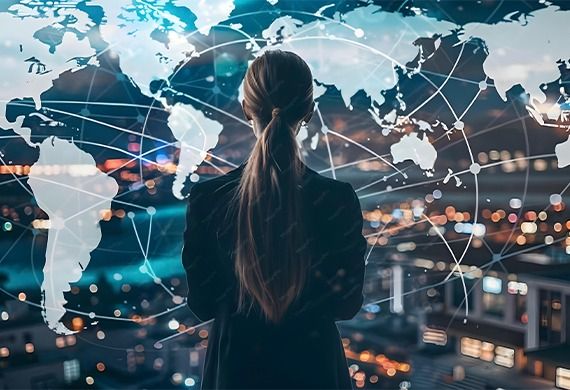

The World Bank Group and Visa Foundation are announcing a global effort to build a more resilient and empowered women-led small business ecosystem by increasing access to finance, digital tools, and business education and training and improving financial ecosystems throughout emerging markets. The program will initially work for women entrepreneurs in India, South Africa, Nigeria, Colombia and Mexico, where access to capital and financial services remains a challenge for women entrepreneurs.
The partnership will collaborate with local financial institutions, governments, microfinance organizations and non-profit organizations to create financial solutions that address the needs of women-owned businesses. The project aims to solve the chronic financing gap that is blocking the development of women entrepreneurs from investing in their businesses, creating jobs and expanding their operations.
Micro, small and medium-sized enterprises (MSMEs) are a substantial contributor to the number of businesses and employment around the world, especially in developing economies, where they are an important driver for economic growth and poverty alleviation. The World Bank, however, reported that many of these enterprises are still facing challenges to access affordable finance, business development support and digital financial services, particularly for women's entrepreneurs.
The program focuses on both access to finance and digital innovation, beyond the traditional financing frameworks. It encourages financial institutions to harness alternative data sources, digital distribution channels and digital technology solutions that could enable them to better understand and meet the needs of underserved entrepreneurs.
Key Highlights:
- Supports women-led MSMEs with finance, digital tools and training
- Uses AI and digital finance to improve access to credit
- Partners with local organizations to strengthen women entrepreneurship
The World Bank has emphasized in its blog post that innovation is vital to enhancing financial inclusion. What is making a difference, it said, is innovation, with digital tools and new sources of information paving the way to financing for women.
The initiative also acknowledges the unique economic and regulatory context where women entrepreneurs work. This means that the program will not be based on a one-size-fits-all solution, but will focus on locally applicable solutions. For instance, financial models that work in India might need a lot of modification to work in Nigeria, South Africa, Mexico or Colombia.
Technology will be a key element in the program. The partnership will help to foster credit assessment solutions that incorporate AI and digital support platforms and financial products for small business realities. These measures are designed to eliminate the impediments which frequently obstruct women entrepreneurs from getting formal credit.
Early initiatives include a Gender bonds pilot project in India that examines credit enhanced "gender bonds. The model aims at creating an institutional framework for longer-term financing of financial institutions, which could be channeled into financing for women entrepreneurs.
The partnership gives emphasis also to the capability of business skills and digital skills. Visa Foundation has already backed programs in Latin America to train women entrepreneurs on digital skills, offer them business tools and other practical resources to help develop their businesses at various stages.
In Nigeria, the project is closely connected to wider initiatives seeking to enhance access to finance for MSMEs, who are a major contributor to economic activity and still struggle to access affordable formal sources of credit. One of the groups which are most impacted by these financing challenges are women-owned businesses.
In the long-term, the World Bank Group and Visa Foundation aim to create more robust ecosystems that support women entrepreneurs through a mix of international knowledge and local connections, they said. It will allow more women entrepreneurs to scale up their businesses, create jobs and contribute to sustainable economic development in emerging markets, by improving access to capital, technology, digital skills and financial services.
Current Issue
Most Viewed
- 1 Talented Indian Female Actors Who Also Moonlight as Successful Producers
- 2 7 Indian Female Podcasters You Must Know About
- 3 7 Powerful Independent Indian Women Journalists Who are Voices of Change
- 4 Ruchikaa Kapoor Sheikh: The Creative Mind Behind Netflix India's Popular Shows
- 5 7 Most Influential Women Educators India has had over the Years
- 6 11 Breakthrough Female Faces Ruling the Indian OTT Platforms
- 7 8 Timeless Female Indian Classical Dancers & their Legacy
- 8 Women's Health Startup HerMD Closing Doors Amid Industry Challenges
- 9 Real Meets Reel: A List of 11 Indian Movies based on Real Women
- 10 Rasha Hassan: A Visionary Leader On A Mission To Transform Dubai's Real Estate Landscape
- 11 5 Indian Women-led IPOs You Must Know About
- 12 11 of the Most Iconic 21st Century Women to become "The First Indian Woman"
- 13 India's 7 Funniest Women Stand-Up Comics You Must Follow
- 14 Aparna Purohit : Leading India's Most Popular OTT Platforms
- 15 How Leaders Can Balance Risk & Innovation in Today's Banking Landscape
- 16 Dr. K. Shilpi Reddy: Sculpting Healthier Futures For The Next Generation With Reforms In Obstetrics Care
- 17 Sylvia Dcosta: A Visionary Business Leader Pushing The Limits And Setting High Professional Standards
- 18 Top 5 All-Rounder Women Cricketers of India
- 19 How Tata AIA is Empowering Women with Insurance That Understands Their Needs


