
- UNESCO and its partners organized a panel at the India AI Impact Summit 2026
- The panel was on the topic of women in AI, representation, and equity in South Asia
- The main goal was to foster a gender-inclusive and ethical AI landscape
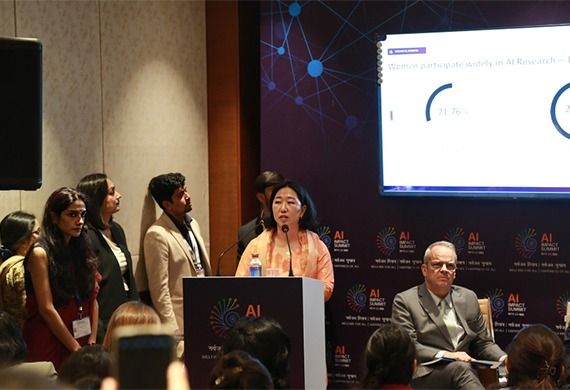
UNESCO, in partnership with the Women4Ethical AI (W4EAI) South Asia Chapter, UN Women, LinkedIn, The Quantum Hub, and Amrita University, organized a panel discussion on ‘Women in AI: A South Asia Outlook on Representation, Equity & Empowerment’ as part of the India AI Impact Summit 2026.
This panel discussion aimed to promote inclusive and ethical AI in the region of South Asia. The panel, comprising policymakers, researchers, industry leaders, and civil society members, presented emerging insights from UNESCO's forthcoming ‘Gender & AI Outlook Study’ for the region of South Asia, in addition to insights from the ‘Women and Future Jobs’ policy brief developed by LinkedIn.
Today, AI is an integral part of our economies, our systems, and our lives, but sadly, women are underrepresented in all stages of AI, from data and design to development and deployment.
Unless action is taken, the current gaps in equality will be locked in and potentially amplified in the AI systems currently in development, said Tim Curtis, Director & Representative of UNESCO's Regional Office for South Asia.
Initial findings from the South Asia Gender and AI Outlook Study indicate there are still significant gaps between male and female representation in the workforce and leadership positions within AI Research.
For instance, as of 2024, the rate of females participating as AI Engineering Professionals in India will be 29.92 percent. This rate drops to 20.57 percent and 15.64 percent respectively for females from Nepal, and Bangladesh, with a further down trend seen throughout the broader region.
Also, while more than 70.00 percent of total published AI content produced by practitioners located within Bangladesh, Bhutan, India, Maldives, Nepal and Sri Lanka includes at least one female author, only 26.01 percent had female Continuing or Corresponding Authors. In other words, males and females from South Asia are present in Research at different levels (or densities).
During a panel discussion, the need for auditing AI Systems was highlighted; establishing pathways to Women's participation and leadership; recognition of many invisible contributions made by women throughout the Global AI Value Chain; and identification of Structural barriers preventing the inclusion of Women were all discussed.
Structural Barriers discussed included; Lack of exposure to AI in developmental processes for females such as Cultural Norms creating gendered barriers within organizations; and Infrastructure barriers (example lack of access to technology).
Current Issue
Most Viewed
- 1 Talented Indian Female Actors Who Also Moonlight as Successful Producers
- 2 7 Indian Female Podcasters You Must Know About
- 3 7 Powerful Independent Indian Women Journalists Who are Voices of Change
- 4 Ruchikaa Kapoor Sheikh: The Creative Mind Behind Netflix India's Popular Shows
- 5 7 Most Influential Women Educators India has had over the Years
- 6 11 Breakthrough Female Faces Ruling the Indian OTT Platforms
- 7 8 Timeless Female Indian Classical Dancers & their Legacy
- 8 Women's Health Startup HerMD Closing Doors Amid Industry Challenges
- 9 Real Meets Reel: A List of 11 Indian Movies based on Real Women
- 10 Rasha Hassan: A Visionary Leader On A Mission To Transform Dubai's Real Estate Landscape
- 11 5 Indian Women-led IPOs You Must Know About
- 12 11 of the Most Iconic 21st Century Women to become "The First Indian Woman"
- 13 India's 7 Funniest Women Stand-Up Comics You Must Follow
- 14 Aparna Purohit : Leading India's Most Popular OTT Platforms
- 15 How Leaders Can Balance Risk & Innovation in Today's Banking Landscape
- 16 Dr. K. Shilpi Reddy: Sculpting Healthier Futures For The Next Generation With Reforms In Obstetrics Care
- 17 Sylvia Dcosta: A Visionary Business Leader Pushing The Limits And Setting High Professional Standards
- 18 Top 5 All-Rounder Women Cricketers of India
- 19 How Tata AIA is Empowering Women with Insurance That Understands Their Needs


