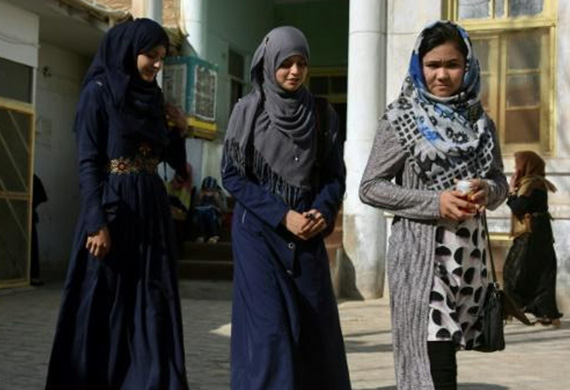

The Afghan Opiate Trade Project (AOTP) at CRIMJUST, Border Management Branch, United Nations Office on Drugs and Crime launched a study on Afghan women and the opiate trade (UNODC). The research offers a distinctive perspective on the part played by Afghan women in the country's opium trade.
Afghanistan has been the main producer of illicit opium in the world for almost 20 years. Opiate production in Afghanistan has an impact on government and economic growth, and it continues to feed corruption, terrorism, conflict, and bad health in Afghanistan, southwest Asia, and elsewhere. Illegal opiate trafficking contributes to the instability of Afghanistan and the nations bordering the main trafficking routes.
There has been a lot of research on opiate production in Afghanistan, but there are few in-depth studies on opiate manufacture or trafficking there, and no specific study on women's participation in these activities. In 2020, the UNODC published a research based on interviews with active male Afghan drug traffickers, known as Quchaqbar in Dari/Farsi, who were actively engaged in the trafficking of opiates both domestically and internationally. The 2020 study's interviewees were all male. Accessing women traffickers, known as Quchaqbar zan in Dari, in the context of Afghanistan's culture proved difficult, and it was first believed that women's involvement in the opiate trade was limited to anecdotal reports of female drug mules and the cultivation and harvesting of opium.
However, several male traffickers stated in the 2020 study that Afghan women's participation in the opiate trade had expanded over the course of the five years from 2015 to 2020 and that women played many positions in the industry.
Based on information acquired from nine interviews with Afghan female traffickers, the UNODC's Afghan Opiate Trafficking Project, within the context of CRIMJUST, started the current study to better understand the role of Afghan women in the opiate trade in Afghanistan. The study looks into how Afghan women are involved in the drug trade, why they get involved and stay involved, the business model, and the networks that support drug trafficking.
"Mapping criminal networks is essential to understanding the illicit opiate trade, both within Afghanistan and internationally” – emphasized Alan Cole, the Chief of the Border Management Branch at the launch of the research study in Vienna.
The research report claims that Afghan women play a variety of roles in the illegal opiate trade, including selling heroin to consumers and shipping the drugs outside of Afghanistan. The ladies continued to be involved in the drug trade mostly for financial reasons despite having started out with a mix of social and economic motivations. The money they made from the opiate trade was directly managed by them, and it was mainly put toward saving and household expenses. Due to societal constraints and cultural conventions, the women frequently worked for family-based drug trafficking organisations and remained on the perimeter of the larger organisation. Following the Taliban's restoration to power, several women abandoned the opium trade; yet, other women claimed that trafficking had gotten simpler."Opiates are cultivated in areas where there is less gender equality", stated Ms. Alison Davidian, Country Representative for UN Women in Afghanistan.
She emphasised that when creating programmes aimed at women in Afghanistan, the country's larger cultural context must be taken into account.
This research is the first to examine opiate trafficking from the eyes of Afghan women. Their testimonies offer fresh perspective on a hitherto unknown group. This study not only adds to the body of knowledge on the subject of women's involvement in drug trafficking, but it also offers a solid empirical framework for developing focused interventions to assist women in quitting the opiate trade.
It supports broader efforts by the international community to give member states the information and resources they need to achieve the Sustainable Development Goals by 2030, specifically SDG 16: "Promote peaceful and inclusive societies for sustainable development, provide access to justice for all, and build effective, accountable, and inclusive institutions." It was funded by the Bureau of International Narcotics and Law Enforcement Affairs (INL) of the U.S. State Department.
Current Issue
Most Viewed
- 1 Talented Indian Female Actors Who Also Moonlight as Successful Producers
- 2 7 Indian Female Podcasters You Must Know About
- 3 7 Powerful Independent Indian Women Journalists Who are Voices of Change
- 4 Ruchikaa Kapoor Sheikh: The Creative Mind Behind Netflix India's Popular Shows
- 5 7 Most Influential Women Educators India has had over the Years
- 6 11 Breakthrough Female Faces Ruling the Indian OTT Platforms
- 7 8 Timeless Female Indian Classical Dancers & their Legacy
- 8 Women's Health Startup HerMD Closing Doors Amid Industry Challenges
- 9 Real Meets Reel: A List of 11 Indian Movies based on Real Women
- 10 Rasha Hassan: A Visionary Leader On A Mission To Transform Dubai's Real Estate Landscape
- 11 5 Indian Women-led IPOs You Must Know About
- 12 11 of the Most Iconic 21st Century Women to become "The First Indian Woman"
- 13 India's 7 Funniest Women Stand-Up Comics You Must Follow
- 14 Aparna Purohit : Leading India's Most Popular OTT Platforms
- 15 How Leaders Can Balance Risk & Innovation in Today's Banking Landscape
- 16 Dr. K. Shilpi Reddy: Sculpting Healthier Futures For The Next Generation With Reforms In Obstetrics Care
- 17 Sylvia Dcosta: A Visionary Business Leader Pushing The Limits And Setting High Professional Standards
- 18 Top 5 All-Rounder Women Cricketers of India
- 19 How Tata AIA is Empowering Women with Insurance That Understands Their Needs


