
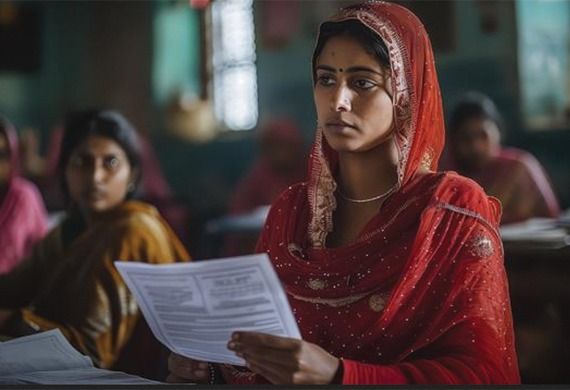

A recent study published in the Journal of Biosocial Science has highlighted significant menstrual and reproductive health challenges among Santhal tribal women in rural West Bengal. The community-based research found that limited access to safe menstrual products, inadequate hygiene practices, and socioeconomic disadvantages contribute to a considerable burden of genitourinary symptoms and urinary infections. The findings also point to gaps in healthcare access and menstrual health awareness among women from marginalised communities.
Key Highlights:
- Around 60% of surveyed Santhal women relied on old cloths for menstrual management, often washing them without soap
- Urine cultures detected significant bacteriuria in 79.4% of the 34 women tested
- Nearly 30% of women experiencing reproductive or genitourinary symptoms did not seek professional medical care
The researchers conducted the study during 2023–2024 across three villages – Madhaiganj, Bansol and Amdahi – in the Faridpur-Durgapur Community Development Block of Paschim Bardhaman district. The survey included 180 Santhal women aged 15–49 years and examined their menstrual practices, reproductive health symptoms, socioeconomic conditions, and healthcare-seeking behaviour.
The findings revealed considerable gaps in menstrual hygiene management. While 32.2% of participants used commercial sanitary pads, 60% depended on old cloths and 7.8% used new cloth. Among cloth users, 35% washed their absorbents using water alone without soap, while 66.6% dried them indoors because of privacy concerns and social stigma. Limited awareness also emerged as a concern, with only 20.6% of participants reporting knowledge of menstruation before experiencing their first menstrual cycle.
Social restrictions further shaped women's menstrual experiences. Around 53.9% considered menstruation impure or a curse, while 67.2% believed women should conceal it. Additionally, 90% reported restrictions on participating in religious ceremonies during menstruation. These findings highlight how cultural practices and gender norms influence menstrual health beyond the availability of hygiene products.
The study also documented several reproductive and genitourinary complaints. Lower abdominal pain affected 46.1% of participants, followed by urethral discharge at 32.2%, genital itching at 17.8%, and vaginitis at 11.7%. Researchers conducted urine cultures on a smaller group of 34 women to investigate bacterial infections. Of these, 27 tested positive for significant bacteriuria, representing 79.4% of the tested group. Notably, seven women without reported symptoms also showed bacterial presence in their urine. Escherichia coli emerged as the most frequently identified pathogen.
Socioeconomic conditions also influenced health outcomes. Illiterate women had 2.35 times higher adjusted odds of reporting reproductive or genitourinary symptoms than literate participants. Women from lower socioeconomic backgrounds also showed higher adjusted odds of morbidity. These findings underline the relationship between educational access, financial security and women's reproductive health.
Healthcare-seeking patterns revealed another concern. Around 30% of symptomatic women did not seek professional medical assistance. Others approached government healthcare facilities, private practitioners, or traditional healers, while some relied on self-medication.
The researchers described these interconnected challenges as a triple burden involving inadequate menstrual management, reproductive and urinary health problems, and limited access to institutional healthcare. They called for stronger menstrual health education, affordable hygiene products, improved sanitation, and accessible healthcare outreach in tribal communities.
The researchers also acknowledged that the study covered only three villages and tested urine samples from 34 women. Therefore, its findings cannot establish cause-and-effect relationships or represent the entire Santhal population. Nevertheless, the research highlights the importance of addressing the social and economic barriers that shape women's health.
Current Issue
Most Viewed
- 1 Talented Indian Female Actors Who Also Moonlight as Successful Producers
- 2 7 Indian Female Podcasters You Must Know About
- 3 7 Powerful Independent Indian Women Journalists Who are Voices of Change
- 4 Ruchikaa Kapoor Sheikh: The Creative Mind Behind Netflix India's Popular Shows
- 5 7 Most Influential Women Educators India has had over the Years
- 6 11 Breakthrough Female Faces Ruling the Indian OTT Platforms
- 7 8 Timeless Female Indian Classical Dancers & their Legacy
- 8 Women's Health Startup HerMD Closing Doors Amid Industry Challenges
- 9 Real Meets Reel: A List of 11 Indian Movies based on Real Women
- 10 Rasha Hassan: A Visionary Leader On A Mission To Transform Dubai's Real Estate Landscape
- 11 5 Indian Women-led IPOs You Must Know About
- 12 11 of the Most Iconic 21st Century Women to become "The First Indian Woman"
- 13 India's 7 Funniest Women Stand-Up Comics You Must Follow
- 14 Aparna Purohit : Leading India's Most Popular OTT Platforms
- 15 How Leaders Can Balance Risk & Innovation in Today's Banking Landscape
- 16 Dr. K. Shilpi Reddy: Sculpting Healthier Futures For The Next Generation With Reforms In Obstetrics Care
- 17 Sylvia Dcosta: A Visionary Business Leader Pushing The Limits And Setting High Professional Standards
- 18 Top 5 All-Rounder Women Cricketers of India
- 19 How Tata AIA is Empowering Women with Insurance That Understands Their Needs


