
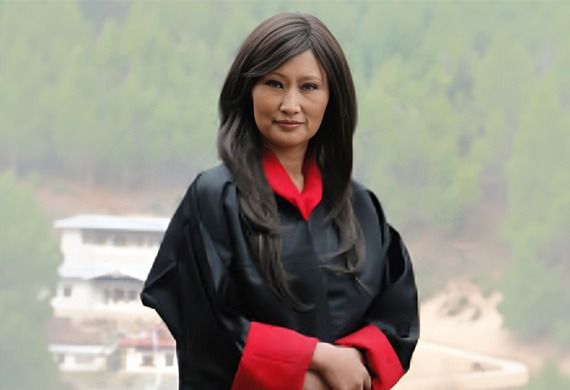

Lily Wangchuk, Bhutan's first woman to lead a political party, has highlighted the barriers that continue to limit women's participation in politics, including low self-confidence, limited professional networks and gender bias within political organizations. Speaking at the eShe South Asia Union Summit 2026, she stressed that changing societal mindsets is essential to improving women's political representation across South Asia.
Lily, who served as president of Druk Chirwang Tshogpa (Bhutan Social Democratic Party), shared her political journey and the challenges she faced while entering public service. A former diplomat, politician, activist and author, she has also worked with United Nations agencies and Bhutanese institutions, focusing on gender equality, wellbeing and inclusive development.
She holds a Bachelor of Arts in Political Science from Miranda House College in India, a Master of Public Policy in International Diplomacy from the Australian National University and a postgraduate diploma in Human Rights and International Law from the Indian Academy of International Law and Diplomacy.
Key Highlights:
- Lily highlights low confidence, limited networks and gender bias as barriers to women's political participation
- She points out that political parties often favor male candidates, limiting women's opportunities in elections
- She calls for a change in societal mindsets and equal leadership opportunities to strengthen women's representation in South Asian politics
Lily explained that she had been through a rough time and this was what had driven her to take up politics. In 2011-12 when she was diagnosed with cancer, she began to think about her purpose and priorities. She was also the time when Bhutan was undergoing elections and wanted to join the political arena to serve the interests of women and youth, and promote gender responsive policies.
Even with her health issues, Lily was still determined to continue in public service. Campaigning while battling cancer was hard, but her purpose kept her going, she told us.
Lily discussed some of the unique obstacles women encounter in politics: networking. Men tend to have broader social and professional networks, providing them with an edge during elections, she said. Women, on the other hand, often have fewer relations and access to influential political circles.
She also highlighted gender bias in the political parties where organizations tend to prefer a male candidate as they feel he is more likely to be elected. Consequently, there is a possibility that women interested and qualified to stand for elections may not have the same opportunities as men.
Lily said when it comes to how things need to change to boost women's political participation in South Asia, it's time to shift the mindset and challenge the old attitude towards gender. She encouraged young women to build their confidence and opt for political participation as a means to play their part in the process of nation building.
Lily also emphasized the important role that political parties and the media can play in increasing the opportunities for leadership to be more inclusive. More women need to be involved in politics and decision-making, which can be achieved through greater support, stronger networks and equal opportunities, she said.
Current Issue
Most Viewed
- 1 Talented Indian Female Actors Who Also Moonlight as Successful Producers
- 2 7 Indian Female Podcasters You Must Know About
- 3 7 Powerful Independent Indian Women Journalists Who are Voices of Change
- 4 Ruchikaa Kapoor Sheikh: The Creative Mind Behind Netflix India's Popular Shows
- 5 7 Most Influential Women Educators India has had over the Years
- 6 11 Breakthrough Female Faces Ruling the Indian OTT Platforms
- 7 8 Timeless Female Indian Classical Dancers & their Legacy
- 8 Women's Health Startup HerMD Closing Doors Amid Industry Challenges
- 9 Real Meets Reel: A List of 11 Indian Movies based on Real Women
- 10 Rasha Hassan: A Visionary Leader On A Mission To Transform Dubai's Real Estate Landscape
- 11 5 Indian Women-led IPOs You Must Know About
- 12 11 of the Most Iconic 21st Century Women to become "The First Indian Woman"
- 13 India's 7 Funniest Women Stand-Up Comics You Must Follow
- 14 Aparna Purohit : Leading India's Most Popular OTT Platforms
- 15 How Leaders Can Balance Risk & Innovation in Today's Banking Landscape
- 16 Dr. K. Shilpi Reddy: Sculpting Healthier Futures For The Next Generation With Reforms In Obstetrics Care
- 17 Sylvia Dcosta: A Visionary Business Leader Pushing The Limits And Setting High Professional Standards
- 18 Top 5 All-Rounder Women Cricketers of India
- 19 How Tata AIA is Empowering Women with Insurance That Understands Their Needs


