
Leaders
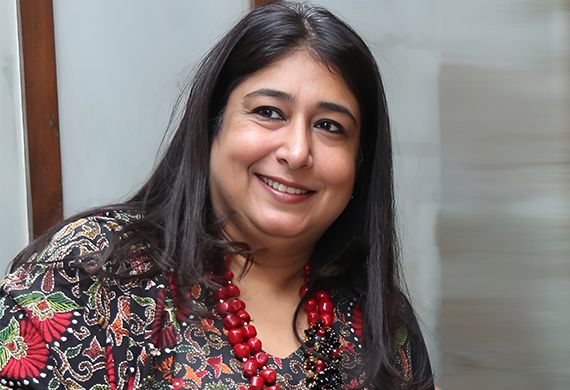


Women leaders today are increasingly redefining entrepreneurship by building enterprises that bring together commercial thinking, social purpose, and cultural relevance.
Their leadership extends beyond business growth, often creating opportunities for communities while preserving knowledge and practices that carry generations of history. In this evolving landscape, leadership is also about creating systems that allow people to participate meaningfully, contribute ideas, and grow with the organisation.
This perspective closely reflects the journey of Malika Dudeja Varma, Founder, Malika's Kanta Collection and Director, SHE Kantha, whose association with Kantha began long before her entrepreneurial journey. Growing up, she saw the craft not merely as a traditional form of embroidery, but as a means of transformation.
Through her mother, Shamlu Dudeja, she witnessed how a simple needle and thread could create economic opportunity, confidence, and dignity for rural women. The experience shaped her understanding of craft as both a livelihood and a vehicle for empowerment.
As she developed her own entrepreneurial journey, Malika Dudeja Varma sought to explore how Kantha could evolve, reach new markets, and find contemporary applications without losing its underlying purpose.
Her professional experiences further reinforced the importance of balancing purpose with business discipline. For her, passion is only the starting point; sustainable growth requires strong systems, financial viability, consistency, and the ability to adapt to changing circumstances.
Her approach to leadership has consequently developed around people as much as outcomes. Malika Dudeja Varma believes leadership involves bringing individuals together around a shared purpose while allowing them the freedom to contribute their own strengths and ideas. She has found that when people feel genuine ownership of what they are creating, their relationship with the work becomes deeper and more meaningful.
Through this philosophy, Malika Dudeja Varma continues to view entrepreneurship not simply as building a business, but as creating an ecosystem where craft, purpose, enterprise, and individual agency can develop alongside one another.
Malika dudeja varma blends traditional kantha craftsmanship with contemporary creativity, empowering women while building sustainable opportunities through cultural entrepreneurship
Kantha has moved from a rural embroidery tradition into fashion, décor, art, and larger design applications. What milestones have shaped this journey, and how has your own perspective evolved?
One of the most important milestones has been seeing Kantha move beyond its traditional boundaries into fashion, home décor, contemporary art, and increasingly, larger-scale design and spatial applications. For me, the biggest shift has been understanding that preserving a craft does not mean keeping it frozen in time. I now see Kantha as a creative language rather than simply a product. This opens possibilities ranging from individual objects to artworks, installations, and collaborations with architects and designers. At the same time, my business experience has taught me that creative ambition must be supported by commercial sustainability if the artisan ecosystem is to thrive.
Your work connects traditional craftsmanship with women’s livelihoods and contemporary markets. What vision guides your leadership?
My larger vision is to ensure that the artisan remains at the heart of the value chain. Kantha should be valued for the skill, time, and human labour behind every creation, while the women making it should have meaningful and sustained livelihoods. Balancing authenticity, innovation, and commercial sustainability is essential. Cultural authenticity cannot mean refusing to evolve, just as contemporary design should not erase the identity of the craft. We constantly ask ourselves how we can take Kantha forward without taking away what makes it Kantha. For me, commercial sustainability and social impact are interconnected; one cannot be sustained without the other.
How do you work with artisans and creative teams while maintaining quality and ensuring traditional knowledge remains central?
It begins with respect. Artisans possess knowledge and skills that cannot simply be captured in a manual, so recognising and valuing their expertise is fundamental. At the same time, quality requires structure, particularly when we undertake large or complex projects.
We establish clear standards, processes, and communication, but the relationship between the design team and artisans must remain a dialogue rather than a one-way transfer of instructions. I also believe strongly in listening. Some of our best decisions have emerged from understanding what artisans say about a design, technique, or production challenge. The goal is for traditional knowledge and contemporary thinking to strengthen each other.
How are you making Kantha relevant to younger audiences and new markets while protecting its cultural identity?
The key is to change the context without changing the soul. Younger audiences may not connect with Kantha simply because it is an old Indian craft, but they connect with its beauty, individuality, tactility, and authenticity. We therefore focus on these qualities while presenting the craft through contemporary design, storytelling, and new applications.
Digital platforms have also helped us reach audiences who may never have encountered Kantha otherwise. They allow us to showcase the process, introduce the artisans, and communicate the story behind the work. At the same time, we believe Kantha must continue entering fashion, interiors, art, architecture, and contemporary design.
How can collaborations across fashion, art, architecture, and design contribute to Kantha’s future?
Collaboration is one of the most powerful ways to keep a craft alive. When Kantha enters conversations with architecture, contemporary art, or interior design, it encounters new approaches to scale, material, composition, and space. These collaborations can create possibilities that may not emerge within traditional craft ecosystems alone. However, collaboration must remain respectful and equitable.
Entrepreneurs have a responsibility to ensure artisans are acknowledged and that the value created flows back into the craft community. I see entrepreneurs as bridges connecting traditional knowledge with new markets, designers with artisans, and local skills with global audiences. Our role is not to replace traditional knowledge, but to create opportunities for it to thrive.
Malika Dudeja Varma, Founder, Malika's Kanta Collection
Malika Dudeja Varma is the Founder of Malika's Kanta Collection and Director of SHE Kantha. Building on her deep-rooted association with Kantha, she works to take the traditional craft into contemporary fashion, art, interiors, and design while creating meaningful opportunities for women artisans and strengthening the craft’s economic sustainability.
Current Issue
Most Viewed
- 1 Talented Indian Female Actors Who Also Moonlight as Successful Producers
- 2 7 Indian Female Podcasters You Must Know About
- 3 7 Powerful Independent Indian Women Journalists Who are Voices of Change
- 4 Ruchikaa Kapoor Sheikh: The Creative Mind Behind Netflix India's Popular Shows
- 5 7 Most Influential Women Educators India has had over the Years
- 6 11 Breakthrough Female Faces Ruling the Indian OTT Platforms
- 7 8 Timeless Female Indian Classical Dancers & their Legacy
- 8 Women's Health Startup HerMD Closing Doors Amid Industry Challenges
- 9 Real Meets Reel: A List of 11 Indian Movies based on Real Women
- 10 Rasha Hassan: A Visionary Leader On A Mission To Transform Dubai's Real Estate Landscape
- 11 5 Indian Women-led IPOs You Must Know About
- 12 11 of the Most Iconic 21st Century Women to become "The First Indian Woman"
- 13 India's 7 Funniest Women Stand-Up Comics You Must Follow
- 14 Aparna Purohit : Leading India's Most Popular OTT Platforms
- 15 How Leaders Can Balance Risk & Innovation in Today's Banking Landscape
- 16 Dr. K. Shilpi Reddy: Sculpting Healthier Futures For The Next Generation With Reforms In Obstetrics Care
- 17 Sylvia Dcosta: A Visionary Business Leader Pushing The Limits And Setting High Professional Standards
- 18 Top 5 All-Rounder Women Cricketers of India
- 19 How Tata AIA is Empowering Women with Insurance That Understands Their Needs


