
Leaders
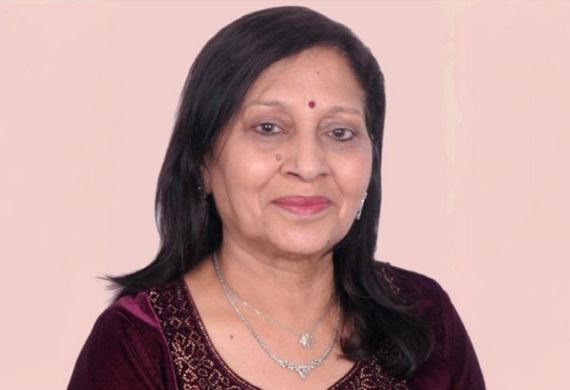

‘Innovate or perish’ is the order of the day and sharp business leaders live by this mantra. A strong proponent of this philosophy is Dr Madhu Vij, whose professional journey reflects the quiet strength of a generation of women who shaped India’s academic and governance landscape by evolving with it.
An eminent finance academic and seasoned Independent Director, Madhu spent over four decades at the Faculty of Management Studies (FMS), University of Delhi, after beginning her teaching career at Lady Shri Ram College. Joining FMS in 1978, at a time when business education and faculty leadership were largely male-dominated, she built her place through academic rigour, resilience, and an unwavering commitment to excellence.
Specialising in finance, international finance, banking, and financial services, she adapted her scholarship and teaching to India’s changing economic realities from liberalisation in the 1990s to the complexities of post- 2000 corporate failures and governance challenges. These experiences later informed her work as an Independent Director post-2010, where she brought deep financial insight, risk awareness, and ethical oversight to boardrooms.
Beyond professional milestones, her story is rooted in strong family values, self-belief, and positive motivation principles that shaped her leadership style as a professor, mentor, and board member. Balancing academia, research, governance roles, and family life, she stands as a compelling example of how influence is built steadily, thoughtfully, and with purpose.
Tell us about your professional journey as a boardroom leader and governance expert. What pivotal moments or transitions defined your path?
My boardroom journey began in 2010, but industry exposure came much earlier through academia. At FMS, constant industry–academia interactions, placements, live projects, alumni engagement, and executive programs kept us closely connected to how businesses actually function. I was deeply involved in placements during the global financial crisis, which built resilience and sharpened judgment.
My first independent directorship came through trust and professional credibility, proving that positive networking matters. Post the Companies Act, 2013, with its strong focus on risk management and women directors, my board roles expanded.
Enterprise risk management became a turning point, reshaping how I viewed governance. Over time, I learned that an independent director’s role evolves from understanding business models to asking tough questions while staying truly independent, ethical, and vigilant.
My advice to young women is simple: be yourself, stand up for yourself, and become financially independent because no one hands you power; you claim it. Keep learning, especially emerging skills like AI, data, and technology, and stay adaptable. But never lose empathy, that’s your real strength
As an Independent Director, what core responsibilities and ethical principles guide your decision-making and contribution?
Independent directors, as envisioned by SEBI, play a pivotal role in upholding corporate governance in an increasingly complex business environment. This means closely reviewing financial statements and, more importantly, the management discussion and analysis, which often reveals what numbers alone do not.
At the core is long term shareholder value creation, a loaded term, because it requires balancing the interests of all stakeholders, including society and the environment.
The first year on a board is a learning phase, focused on compliance; thereafter, the role becomes strategic, questioning five-year plans, growth pathways, and risks. Continuous training, digital literacy, ESG awareness, vigilance on related-party transactions, and strong ethics are now non-negotiable.
What key challenges do you encounter as an independent director, and how do you navigate complex boardroom dynamics?
Fortunately, I haven’t personally faced major disharmony in boardrooms, though I am aware it exists, especially in large companies where independent directors have even stepped down. One key challenge is transparency; when information is incomplete, it limits informed judgment.
Power imbalances and boardroom pressures can also affect independent decision-making, particularly when management changes mid-tenure, and trust has to be rebuilt.
In India, related-party transactions, ethics, and board diversity remain concerns. Despite regulatory mandates, women independent directors are still underrepresented, reflecting how difficult it is to break old “all-boys’ club” mindsets. Oversight failures, seen globally, reinforce the need for strong compliance.
Today, a critical challenge is digital readiness, understanding technology, AI, ESG, and sustainability risks to govern with confidence and relevance.
What governance frameworks or leadership practices do you advocate for to ensure transparency, accountability, and long-term value creation?
The priority is always shareholder value, while safeguarding minority interests. SEBI’s requirement for independent directors to meet annually without management is extremely important as it allows free expression and truly independent judgment. It also helps us assess board dynamics: diversity of skills, quality of agendas, power balance, and whether every voice is heard.
Leadership style matters greatly. I have seen boards led by empathetic, participative, and transformational leaders where collaboration drives stronger decisions. Long-term value creation, from a finance lens, means returns exceeding the cost of capital.
Positive profits alone are not enough; metrics like ROIC and economic value added matter too. A company can show profits yet destroy value. As independent directors, the role is to prevent that through sound governance, oversight, and financial discipline.
How do you foresee the role of Independent Directors evolving in India?
I remember in 2003-04, when financial services were booming, we lived by the mantra “innovate or perish.” That remains even more relevant today. As independent directors, we must understand AI, digital tools, and emerging technologies; otherwise, we risk becoming irrelevant.
Over the next five years, independent directors must prioritise innovation, cyber and enterprise risk management, ethical AI governance, ESG compliance, and sustainable leadership.
Accountability has increased sharply, along with legal exposure, so the role is far from rosy. Continuous upskilling, regulatory awareness, and vigilance around issues like greenwashing, data analytics, and cyber risks are essential to protect both the company and oneself.
Dr Madhu Vij, Independent Director, Eastman Auto and Power
Dr Madhu Vij is a distinguished academic leader and seasoned Independent Director with over four decades of experience spanning academia, finance, and corporate governance. A former Professor at the Faculty of Management Studies, University of Delhi, she has taught finance, international finance, banking, and financial services through multiple phases of India’s economic transformation. Since 2010, she has served on several boards, bringing deep expertise in risk management, compliance, ESG, and governance.
Current Issue
Most Viewed
- 1 Talented Indian Female Actors Who Also Moonlight as Successful Producers
- 2 7 Indian Female Podcasters You Must Know About
- 3 7 Powerful Independent Indian Women Journalists Who are Voices of Change
- 4 Ruchikaa Kapoor Sheikh: The Creative Mind Behind Netflix India's Popular Shows
- 5 7 Most Influential Women Educators India has had over the Years
- 6 11 Breakthrough Female Faces Ruling the Indian OTT Platforms
- 7 8 Timeless Female Indian Classical Dancers & their Legacy
- 8 Women's Health Startup HerMD Closing Doors Amid Industry Challenges
- 9 Real Meets Reel: A List of 11 Indian Movies based on Real Women
- 10 Rasha Hassan: A Visionary Leader On A Mission To Transform Dubai's Real Estate Landscape
- 11 5 Indian Women-led IPOs You Must Know About
- 12 11 of the Most Iconic 21st Century Women to become "The First Indian Woman"
- 13 India's 7 Funniest Women Stand-Up Comics You Must Follow
- 14 Aparna Purohit : Leading India's Most Popular OTT Platforms
- 15 How Leaders Can Balance Risk & Innovation in Today's Banking Landscape
- 16 Dr. K. Shilpi Reddy: Sculpting Healthier Futures For The Next Generation With Reforms In Obstetrics Care
- 17 Sylvia Dcosta: A Visionary Business Leader Pushing The Limits And Setting High Professional Standards
- 18 Top 5 All-Rounder Women Cricketers of India
- 19 How Tata AIA is Empowering Women with Insurance That Understands Their Needs


