
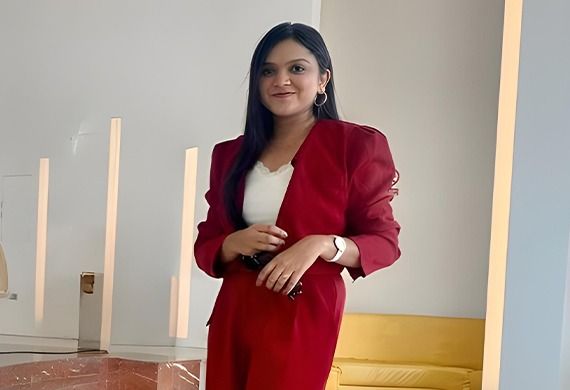

Hiral Sanghvi is a seasoned professional in the plastic and packaging industry, with expertise in manufacturing and distribution of premium tarpaulins and garbage bags. She is known for her strengths in brand building, problem-solving, and adapting to diverse markets, driven by a commitment to growth and operational excellence.
In an engaging interaction with Women Entrepreneurs Review Magazine, Hiral shares her perspective on evolving leadership in manufacturing, highlighting resilience, relationship-building, adaptability, and how women leaders are reshaping traditional industries through practical, people-centric, and purpose-driven approaches.
To explore Hiral’s leadership journey, experiences, and advice in detail, read the full article below and discover her inspiring insight.
You’ve been in the manufacturing space, where innovation and resilience move hand in hand. How do you see leadership evolving for women across such dynamic industries?
When I started working in manufacturing, leadership was very instruction-driven—top-down decisions, limited collaboration, and a lot of assumptions about who should lead. Today, leadership is evolving into something far more dynamic. It’s becoming about clarity, communication, and the ability to adapt quickly, especially in industries where challenges change daily.
I see more leaders—women and men—focusing on problem-solving, understanding teams, being hands-on, and building trust rather than just giving orders. In manufacturing, resilience and innovation go together, and the leaders who succeed now are the ones who balance both with a practical mindset.
More women are stepping into these roles naturally, not because of a movement, but because capability and performance speak louder than titles or stereotypes. People are valuing competence, consistency and deliverables, and that’s improving workplace culture overall.
Leadership today isn’t about authority—it’s about influence, ownership, and being approachable. That shift is what’s changing the industry for the better.
Reflecting on the early days of your leadership journey, what personal experience or turning points shaped how you lead and connect with people today?
In the beginning, I often found myself in rooms where people assumed I was too young or too inexperienced to contribute. Instead of reacting emotionally, I decided to invest in learning every detail of the business—from raw materials to pricing to logistics and exports. That process taught me that confidence comes from clarity.
Over time, I realized leadership isn’t about having all the answers, it’s about asking the right questions and staying calm when things go off-track. Some early mistakes also taught me the value of listening—really listening—to teams and customers.
Today, my leadership style is built around transparency, preparation, and collaboration. I prefer being on the floor with my team, solving problems together, rather than giving directions from a distance. Those early experiences grounded me and shaped a leadership approach based on trust, consistency, and a practical mindset.
Over the years, how have you seen industry leaders bring a new perspective to traditional business systems, especially in driving collaboration, creativity, and long-term growth?
Business systems are changing rapidly, and what worked five years ago doesn’t necessarily work today. I’ve seen a big shift towards leadership that prioritises process clarity, open communication, and long-term thinking instead of short-term pressure. Women naturally contribute to that because they tend to combine structure with empathy, and that balance strengthens organizational culture.
Practicality, detail-orientation, multitasking, and the ability to manage people dynamics have become crucial skills in running any business, especially industries like manufacturing where problem solving is constant.
I see women bringing a fresh, collaborative style to management—less hierarchy, more teamwork, and more transparency.
This approach improves efficiency, reduces friction, and helps build workplaces where people feel valued and therefore perform better. It’s not about replacing old systems, but evolving them.
You’ve often emphasized the significance of building relationships. Can you share a moment where this method helped your team overcome a major challenge or achieve something high?
If there’s one thing I’ve learned, it’s that business is not run by systems alone—it’s run by people. Building genuine relationships has helped me through some of the toughest situations. Whether it was handling a production delay, quality feedback, or an unhappy customer, communication and trust have always worked better than defensive responses.
I remember a situation where packaging issues caused a shipment rejection. Instead of arguing over emails, I chose to speak directly, understand concerns, and openly accept responsibility. That approach turned a breakdown into an opportunity to redesign processes and strengthen the relationship instead of losing it.
When people see honesty, effort, and willingness to improve, they stand by you. Strong relationships create solutions much faster than pressure does, and that mindset has helped me navigate many challenges smoothly.
Being a traveler and a person who loves exploring new cultures, how has this experience of journey inspired your leadership style and openness to new thoughts at work?
Travel changes perspective in ways no textbook can. Every country I’ve visited has taught me something about work ethic and culture. In Japan, I saw precision and discipline at a level that was inspiring. In Dubai, I saw how speed and scale can coexist. In Europe, I saw how balance and respect for time actually increase productivity.
These experiences shaped my approach to leadership—there is no single correct way to work. When you interact with different people, you naturally become more flexible, curious, and open to better methods. It pushes you to ask, “Can we do this differently?” rather than accepting the default.
Travel helped me understand the value of continuous improvement and adaptability, which are essential in fast-moving industries like manufacturing and exports.
LAST WORD: Advice for Industry Leaders to Find Their Voice & Lead With Authenticity
Leadership today is less about position and more about responsibility. My advice would be: focus on building capability and consistency. Know your product, understand your numbers, and stay curious. Don’t rush to lead—lead when you’re ready to take ownership of outcomes.
Also, don’t be afraid of starting small or making mistakes. Every setback teaches something valuable if you treat it as feedback instead of failure. Surround yourself with people who challenge you, not just agree with you.
Most importantly, stay grounded, stay approachable, and stay genuine. People follow leaders they trust, not leaders they fear. Influence is earned through behaviour, not titles.
Current Issue
Most Viewed
- 1 Talented Indian Female Actors Who Also Moonlight as Successful Producers
- 2 7 Indian Female Podcasters You Must Know About
- 3 7 Powerful Independent Indian Women Journalists Who are Voices of Change
- 4 Ruchikaa Kapoor Sheikh: The Creative Mind Behind Netflix India's Popular Shows
- 5 7 Most Influential Women Educators India has had over the Years
- 6 11 Breakthrough Female Faces Ruling the Indian OTT Platforms
- 7 8 Timeless Female Indian Classical Dancers & their Legacy
- 8 Women's Health Startup HerMD Closing Doors Amid Industry Challenges
- 9 Real Meets Reel: A List of 11 Indian Movies based on Real Women
- 10 Rasha Hassan: A Visionary Leader On A Mission To Transform Dubai's Real Estate Landscape
- 11 5 Indian Women-led IPOs You Must Know About
- 12 11 of the Most Iconic 21st Century Women to become "The First Indian Woman"
- 13 India's 7 Funniest Women Stand-Up Comics You Must Follow
- 14 Aparna Purohit : Leading India's Most Popular OTT Platforms
- 15 How Leaders Can Balance Risk & Innovation in Today's Banking Landscape
- 16 Dr. K. Shilpi Reddy: Sculpting Healthier Futures For The Next Generation With Reforms In Obstetrics Care
- 17 Sylvia Dcosta: A Visionary Business Leader Pushing The Limits And Setting High Professional Standards
- 18 Top 5 All-Rounder Women Cricketers of India
- 19 How Tata AIA is Empowering Women with Insurance That Understands Their Needs


