
.jpg "Women's Reservation Bill Rejection, Debate & Reactions")

For a bill designed to create space for women, it found itself struggling for one in the Lok Sabha!
The Indian Constitutional framework saw a flurry of activity and intense proceeding in April 2026. The heightened attention surrounding the Delimitation and Women’s Quota Bills (131st Amendment Bill, 2026) was Indian government’s attempt to accelerate the implementation of the 33% Women’s Reservation (Nari Shakti Vandan Adhiniyam, 2023), for the 2029 Lok Sabha. Fondly referred as the ‘Women’s Power Bill’, the bill stood its ground aiming to advance women’s representation and rights across the country.
During the Bill’s early developments, Narendra Modi, Prime Minister of India, expressed his favor and intent for the Bill. "Have faith in the women of the country, and in their decisions. Let 33% of the women come to the parliament. And then let them make decisions.” "Those who oppose the women's reservation bill today will have to pay the price for a long long time." he added.
However, on Friday, April 17, the Constitution Amendment Bill was defeated in Lok Sabha, the Lower House. Failing to garner the required two-thirds majority, the bill was supported by 298 members voting in its favour while 230 voting against it.
What Led to the Constitution Amendment Bill be Defeated in Lok Sabha?
The Bill’s dependency on the controversial delimitation process led to its rejection and now has reignited a complex national conversation in the nation, one that debates the intersection of policy intent, political will, and societal transformation. Its inability to secure a two-thirds majority is a symbol of a deeper challenge that transcends beyond legislative numbers, raising questions around its intent, timing, and impact.
At the core of it, structural and ideological divides charted the route of what could have been India’s landmark step toward correcting the historical underrepresentation of women in the nations’ legislative framework.
In a span of over 12 years, Narendra Modi-led National Democratic Alliance government has actively pursued a series of reforms aimed at shaping India’s legislative and developmental landscape. With the party building a legacy of notable many firsts to their credit, it recorded a rare setback as the government fell short of passing a bill in parliament the Lok Sabha.
“Today I'm here to discuss an important issue, especially for the women of this country. Every citizen of this country is witnessing how women's progress has stalled... Despite our best efforts, we haven't succeeded. Amendments could not be made in the Nari Shakti Adhiniyam. And I apologise to all the mothers and sisters in the nation for this,” the Prime Minister expressed his disappointment.
As the decision settles amongst the masses, in the backdrop lays a nation that simmers and continues to hold diverse and contrasting perspectives on the bill’s rejection. Women Entrepreneurs Review brings to you some of the reactions and remarks that have emerged in the wake of the bill’s rejection.
Anjali Mandalkar, Supply Chain Leader
“Reservation should be a bridge, not a battleground—enabling capability, confidence, and contribution at ev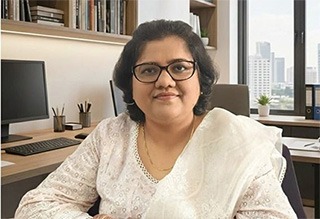 ery level of leadership.”
Amid the ongoing debate, Anjali Mandalkar contributes by sharing her grounded perspective in arguing that reservation is essential for tackling enduring gender inequality, yet emphasizes that it must transcend political maneuvering. She advocates by raising her voice for a change in perspective that views women as equal and essential fundamental contributors to a nation’s economic, social, and financial progress. In her opinion, to overcome the deeply rooted patriarchal mindset, reservation for women serves as a bridge to leadership and empowerment, rather than a contentious political battleground. It would be creating the much needed space for women that have been historically missing.
Shallu Arora, Chief Financial Officer, Sirca Paints India
“Delays or lack of consensus on critical reforms can create ambiguity, impacting investment cycles and business confidence.”
According to Shallu Arora, the Lok Sabha’s failure to pass the recent c determines the need for urgent and better alignment between policy makers, goals, and stakeholder expectations. For a CFO, this lack of consensus creates policy uncertainty, which directly impacts risk assessment and capital allocation. Such delays create an environment that fosters ambiguity, forcing a re-evaluation of investment cycles and reducing business confidence. This reinforces the necessity of strengthening corporate governance and robust scenario planning to navigate uncertainty. For attaining a future legislation that is effective, sustainable, and balanced, there is a need for more consultative approach that actively involves industry stakeholders is essential.
Dr. Sujata Seshadrinathan, Co-Founder & Director, Digital Transformation Basiz Fund Service
“As a woman, it does make me wonder if there are some political powers wary of the voice of Shakti and wanting to keep us out of the system.”
Dr. Sujata Seshadrinathan highlights that while the Women’s Reservation Bill is essential, it is crucial to implement this change only after updating consistency boundaries and seat allocations to reflect current demographic realities. Voicing he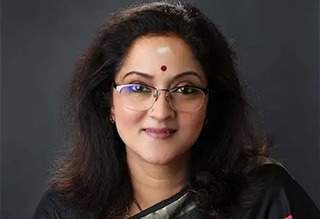 r opinion towards women inclusion, she states that preparing the electorate and developing a strong pipeline of female candidates to close the massive representation gap before the 2026 elections is an immense challenge.
Observers suggest that the bill’s failure, despite intense debate, stems from political calculations rather than an upfront rejection of the concept. However, it still bring to surface a concerning lack of consensus on women’s representation and challenges in implementing these changes for the next election. Falling short of the 2/3rd majority is alarming and makes her wonder if certain political forces are actively trying to suppress the voice of Shakti and exclude women from the political system.
It is interesting to note that since there are both strong supporters and vocal critics for the reservation bill, its failure has garnered polar-opposite reactions among influential women and public figures across the nation.
Priyanka Gandhi Vadra (Congress MP)
Stated that the bill’s failure was a "huge victory for democracy" and a "big win for the Constitution". "We can never agree to linking delimitation with women's reservation".
Sudha Murty (Rajya Sabha MP)
Expressed her disappointment, she described the development as a "lost chance for women to become part of policy-making". Sudha is hopeful for the future passage, stating, "Any social change requires time".
Rekha Sharma (Former NCW Chairperson)
Spoke with conviction attacking the Opposition, holding them accountable of having "bad intentions" and stalling the bill for decades, calling the opposition's actions "anti-women”.
Kangana Ranaut (BJP MP)
Voiced her disappointment by stating that "All the women have become demotivated,” The bill’s inability to pass was discouraging for every woman; however, she expressed her confidence in the development of the nation under the aegis of Prime Minister Narendra Modi.
Current Issue

Most Viewed
- 1 Talented Indian Female Actors Who Also Moonlight as Successful Producers
- 2 7 Indian Female Podcasters You Must Know About
- 3 7 Powerful Independent Indian Women Journalists Who are Voices of Change
- 4 Ruchikaa Kapoor Sheikh: The Creative Mind Behind Netflix India's Popular Shows
- 5 7 Most Influential Women Educators India has had over the Years
- 6 11 Breakthrough Female Faces Ruling the Indian OTT Platforms
- 7 8 Timeless Female Indian Classical Dancers & their Legacy
- 8 Women's Health Startup HerMD Closing Doors Amid Industry Challenges
- 9 Real Meets Reel: A List of 11 Indian Movies based on Real Women
- 10 Rasha Hassan: A Visionary Leader On A Mission To Transform Dubai's Real Estate Landscape
- 11 5 Indian Women-led IPOs You Must Know About
- 12 11 of the Most Iconic 21st Century Women to become "The First Indian Woman"
- 13 India's 7 Funniest Women Stand-Up Comics You Must Follow
- 14 Aparna Purohit : Leading India's Most Popular OTT Platforms
- 15 How Leaders Can Balance Risk & Innovation in Today's Banking Landscape
- 16 Dr. K. Shilpi Reddy: Sculpting Healthier Futures For The Next Generation With Reforms In Obstetrics Care
- 17 Sylvia Dcosta: A Visionary Business Leader Pushing The Limits And Setting High Professional Standards
- 18 Top 5 All-Rounder Women Cricketers of India
- 19 How Tata AIA is Empowering Women with Insurance That Understands Their Needs


