
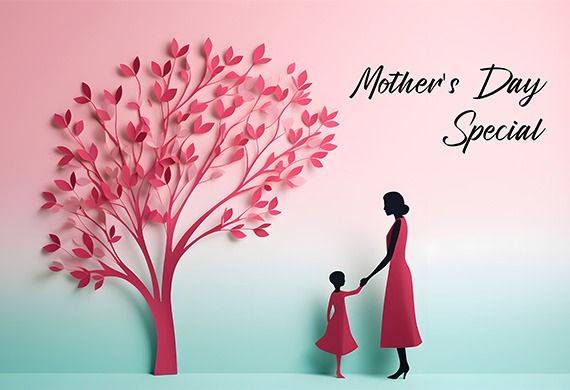

This Mother’s Day, hear from the Power Moms of India on how they are leading at work and thriving at home. Explore the many facets of how how mothers are redefining leadership with resilience, empathy, and ambition.
Motherhood has historically been framed as a defining but limiting stage in a woman’s life. It’s often seen as a point at which professional ambition either slows down or is placed on the back burner. A study by Ashoka University in 2025 reported that a whopping73% of women exit the workforce post-childbirth.
That story, however, is changing gradually. Women across industries are no longer choosing between professional growth and motherhood, but are redefining both.
Working mothers of today are not looking for an ideal balance. They are swimming in complexity, making choices and building systems that allow them to be a person and a professional. In doing so, they are redefining leadership by making it more empathetic, adaptive and human.
Through various conversations with team Women Entrepreneurs Review, women leaders and founders opened up about their experience of motherhood and how it has shaped their professional journeys.
Their insights point to motherhood not being a detour from leadership, but an experience that deepens leadership expertise.
Motherhood: A Leadership Strength, Not a Limitation
Kashiish A Nenwani, Co-Founder of Wahter, believes, “Motherhood isn't a barrier to greatness; it's the fuel that ignites it.” The entrepreneur behind Wahter, a packaged drinking water startup, puts motherhood in the right perspective and views it as something that empowers women to become better business leaders. 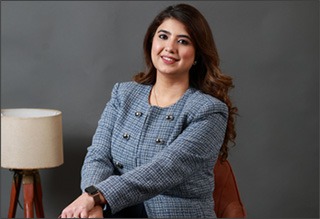
For years, bearing children was viewed as the point where a woman’s career would halt. That notion has now completed evolved as more women are choosing to play the double role - top performers at work and doting parent. They have a unique mix of skills that comes from their life experiences.
Being a mother requires one to be flexible, have a high level of emotional understanding, be resilient, and able to handle uncertainties. These are exactly the kind of leadership qualities that effective leaders need to have. As the workplace continue to change, such qualities are being considered as leaders’ advantages rather than their shortcomings.
Redefining Balance as a Working Mother: From Structure to Fluidity
The conventional notion of work-life balance has usually been understood as a planned division of time-work and personal life in equal measure. Although for working mothers, this idea rarely fits their realities. For them balance is dynamic, always changing, moving, and very much connected to their individuality.
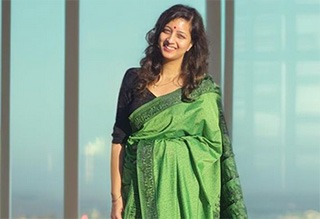 Neha Karnik, Director, Corporate Affairs and Policy, Cipla, shares this progression through her own story. She points out that personal satisfaction is an important part of keeping one's professional side going. She says, “Balancing the demands of a high-pressure job with the joys of motherhood can be daunting. Yet, carving out time for passion can be instrumental in achieving harmony between roles.” For her, dedicating time to her artistic skills is not a luxury she justifies, but rather a necessity that keeps her balanced.
Today’s women are letting go of strict standards and stepping towards a more genuine way of life- one that enables prioritization according to the situations. Balance simply cannot be defined as doing all things in the same measure anymore; it is more about doing the appropriate things at the appropriate moment.
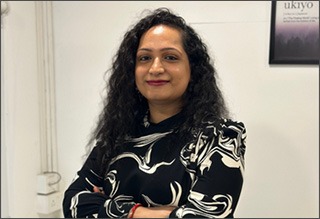
Monalisha Thakur, Co-founder & CMO, Tummoc, through her point of view, touches on the continual reality of juggling multiple roles. “Every day is a juggle… a lesson in making moments count, whether it's a board meeting or bedtime stories,” she explains. Her words depict the very essence of motherhood, recalibrating the meaning of achievement.
Together, these voices change the meaning of balance as a continuing process, one that is less about control and more about deliberate prioritization.
The Unfiltered Reality of Motherhood: Navigating Challenges Without Illusion
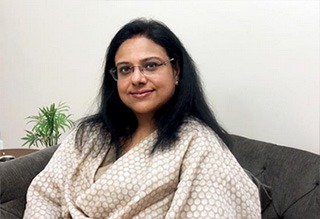
As the discourse on leadership and mothership becomes increasingly empowering, it is necessary to recognize the truth about it. The path may be challenging, and for many women, there is still a great deal of pressure to perform as mothers as well as leaders.
In business and entrepreneurship contexts, for instance, leadership roles are naturally challenging. There is no exception made due to any other role that a person may take up.
Sonica Aron, Managing Partner of Marching Sheep, provides a clear insight into this aspect of life. According to her, “Being an entrepreneur… is a challenging journey. There are no reservations here… The best one wins.” This quote shows how leaders have to work hard to earn success; their performance level becomes the benchmark for their success in the field. 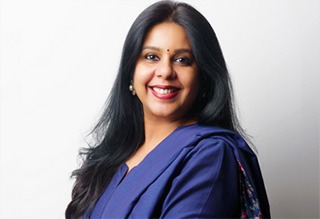
On the other hand, motherhood allows many women to re-evaluate their careers and find innovative ways to keep themselves active in their fields without quitting their jobs. Meeta Nagpal, Founder of Musical Dreams, describes how she changed her course when she became a mother. She says, “I decided if I could not be on the stage, I could very well be behind it.” This shows how motherhood can bring innovation for professional women.
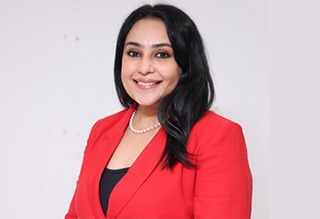 From a more personal perspective, Swapnil Kaushik, Founder, Mom’s Preg-Ladder, gives an insight into the emotional struggles involved in being a new mother. She explains it to be “isolating, difficult and overwhelming,” especially when there is not enough information or support. This point brings into light the psychological aspects of motherhood that may often be ignored.
These different points of view go to show that being a mother is empowering, but it comes with its own set of challenges.
The Power of Support Systems & Collective Growth for Working Mothers
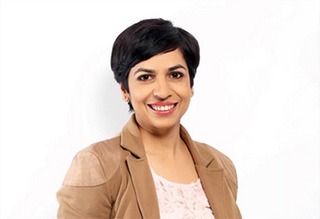 The common thread running through all the dialogues is the critical need for support structures in helping women excel not only as mothers but also as leaders. The role of support is integral irrespective of whether it comes from families, organizational frameworks, or communities.
Major Vandana Sharma, Founders of VaMiKa Heritage, advocates the concept of collective empowerment. As she puts it, “Don't just stand for the success of other women—insist on it.” Major Sharma is providing platforms where women come together, share their thoughts, and grow together.
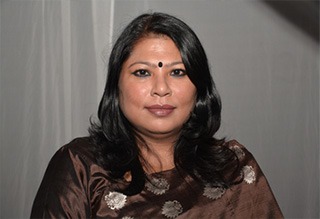 Her approach represents the transition from an individualistic narrative to one focused on community empowerment.
Dr. Aparajita Gogoi, Executive Director, Centre for Catalyzing Change (C3), highlights maternal and reproductive health and rights. She says, “When women embark on motherhood, it is an equally vulnerable period of their lives… without awareness of maternal and reproductive health and rights, women are at risk of unsafe pregnancy and childbirth. To counter this, we engage with women, health officials, and service providers to promote respectful maternal and newborn care.”

At the same time, Gunjan Taneja, co-founder of UClean, points out the often-neglected support systems that empowers women to achieve success beyond their homes. “We also… acknowledge and thank those who support mothers in their absence—the house help, the backup. Your contributions are invaluable.”.
This goes to show that while individual perseverance is necessary, achieving sustainable change requires community effort. Support networks are no longer a luxury but a necessity.
Motherhood & the Expanding Scope of Responsibility
Caregiving has always been associated with motherhood, but in the present scenario, the term is far more comprehensive. Contemporary mothers are not just nurturing their children; they are also planning ahead for their future safety and prosperity.
This broader perspective is especially noticeable when it comes to monetary decisions.
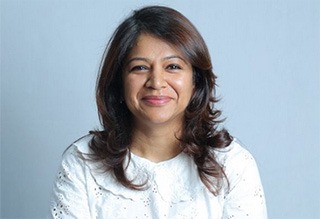 According to Santosh Agarwal, the Chief Business Officer of Life Insurance at Policybazaar, this innate desire becomes abundantly clear. “The very first instinct of every mother is to protect her child,” she says. Financial planning, she says, is an obvious step in this direction.
Her point of view expands the notion of motherhood by proving that it entails not only caring, but also strategizing and forward-thinking.
Such a development is indicative of the increasing realization on the part of women regarding the need for economic freedom and readiness, which enhances their decision-making ability.
Redefining Success: A Personal and Evolving Concept
One amongst the most significant changes may be found in the way modern mothers define what success means. Alongside the traditional definitions of success, which include positions, income, and accomplishments, there are also personal criteria like satisfaction, presence, and influence.
The idea of having to choose between career and family is becoming outdated, as today's women are finding ways to balance both aspects of their lives successfully.
Some believe that success entails being able to experience all those crucial moments of their lives, whether at work or home, while others consider it building something on their own, adding value to an overarching cause, or helping other women succeed in their endeavours.
The one thing that connects all these definitions of success is that it is not a static goal but rather a continually evolving term.
The Way Forward
Motherhood and leadership are not areas of compromise anymore. Modern mothers are not seeking to meet unreasonable expectations but to redefine them. The way how they achieve success in their career paths and build systems around them makes their leadership much more sustainable.
As such, motherhood becomes an essential factor which helps to transform the nature of leadership itself. Motherhood ceases to be perceived as an obstacle on the path to success, becoming one of the ways through which new ideas about leadership can emerge.
Through this process, more and more mothers become leaders.
Current Issue
Most Viewed
- 1 Talented Indian Female Actors Who Also Moonlight as Successful Producers
- 2 7 Indian Female Podcasters You Must Know About
- 3 7 Powerful Independent Indian Women Journalists Who are Voices of Change
- 4 Ruchikaa Kapoor Sheikh: The Creative Mind Behind Netflix India's Popular Shows
- 5 7 Most Influential Women Educators India has had over the Years
- 6 11 Breakthrough Female Faces Ruling the Indian OTT Platforms
- 7 8 Timeless Female Indian Classical Dancers & their Legacy
- 8 Women's Health Startup HerMD Closing Doors Amid Industry Challenges
- 9 Real Meets Reel: A List of 11 Indian Movies based on Real Women
- 10 Rasha Hassan: A Visionary Leader On A Mission To Transform Dubai's Real Estate Landscape
- 11 5 Indian Women-led IPOs You Must Know About
- 12 11 of the Most Iconic 21st Century Women to become "The First Indian Woman"
- 13 India's 7 Funniest Women Stand-Up Comics You Must Follow
- 14 Aparna Purohit : Leading India's Most Popular OTT Platforms
- 15 How Leaders Can Balance Risk & Innovation in Today's Banking Landscape
- 16 Dr. K. Shilpi Reddy: Sculpting Healthier Futures For The Next Generation With Reforms In Obstetrics Care
- 17 Sylvia Dcosta: A Visionary Business Leader Pushing The Limits And Setting High Professional Standards
- 18 Top 5 All-Rounder Women Cricketers of India
- 19 How Tata AIA is Empowering Women with Insurance That Understands Their Needs


