

As conversations around menstrual health grow louder in India, organisations like Humjoli Foundation, Humanify Foundation, Baala, Spriha Society, and Uninhibited are working at the grassroots to challenge stigma, improve access, and drive meaningful change. This article explores how their efforts are pushing period equity beyond awareness and toward dignity, inclusion, education, and systemic reform.
Menstrual health in India is no longer a topic confined to awareness-raising or product distribution. It has gradually grown into a movement focused on human dignity, inclusion and systemic change.
What does period equity really mean? And why is it a critical issue?
Simply put, period equity is about ensuring that menstruation does not become a barrier to women’s education, health or daily life. Other than focusing on improving access to menstrual hygiene products, menstrual equity also prioritizes menstrual education, policy changes, and removing the stigma attached to a rather normal bodily function.
Menstrual equity is a critical issue for millions of women across India; even today periods continue to be shrouded in stigma, ignorance and silence. According to a UNICEF study, 71% of adolescent girls in India remain unaware of menstruation till they get their first period. Girls across several communities face restrictions and taboos that hamper their freedom and choices. Nearly 2.3 crore girls drop out of school at the onset of their periods.
These figures make it clear that menstruation is not merely a private issue, but a widespread public health, educational and social equity challenge.
Menstrual Hygiene Warriors Fighting the Stigma
Addressing these challenges head on are social development experts fighting to achieve menstrual equity. They are doing more than just spreading awareness; they are rewriting the story, creating infrastructure, and enabling grassroot change.
To understand how these challenges are being addressed at the grassroots level, on this National Menstrual Hygiene Day, Women Entrepreneurs Review Team spoke to changemakers in India’s menstrual health sector. Fighting against stigma, misinformation, period poverty and more, 5 social development experts share impactful initiatives that are effecting change in the real-world.
Across these conversations, one message stands out clearly: period equity cannot be achieved through isolated interventions. It demands sustained collaboration across education, healthcare, policy, infrastructure and community engagement.
How Do We Take Menstruation Beyond Silence and Stigma?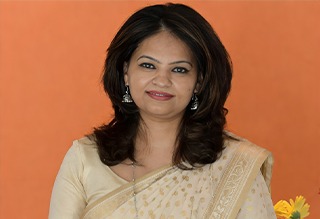
For Dr. Sania Siddiqui, Founder of Humjoli Foundation, the first step lies in facing the silence itself. Her deeply personal, on-ground encounters as a menstrual health expert reveal how menstrual stigma continues to be widespread and deep-rooted.
She remembers an anecdote about a young girl who got frightened seeing menstrual blood and thought she had come down with a serious disease. This goes to show how lack of knowledge can impact a person's behaviour. However, Sania has also witnessed urban and informed women continue to follow restrictive customs, including isolating themselves during menstruation. It is clear that period stigma is not confined to a location or class.
Sania’s objective is clear, “No girl or woman should have to pause her life, feel ashamed, or navigate discomfort in silence simply because she is menstruating.” This kind of thinking is not just about raising awareness, at all. It is about the kinds of places where we can have open and free conversations, whether these are in school, community or at work.
Sania also stresses that menstrual health shouldn't be seen as a single intervention. “Menstrual health isn’t a one-time conversation; it spans a lifetime, from menarche to menopause”. Additionally improving access to resources, information and menstrual hygiene products is just as important. “Dignity is not just about what you know, it’s also about what you can access,” Sania adds, underlining the intersection of awareness and affordability.
Humjoli Foundation’s Work in Practice:
Sania believes that, “information alone doesn’t change behaviour, experience does.” This philosophy is reflected in Humjoli Foundation’s work. The Pune-based menstrual equity and hygiene focused NGO relies on experience-based interactive sessions rather than conventional lecture methods.
By using techniques such as story-telling, acting, and creating events such as “Period Party” and “The Period Lounge,” participants get to simulate real-life situations instead of merely gaining theoretical knowledge. These platforms give participants the opportunity to ask questions and share their experiences freely.
The impact is seen not only in the realm of awareness but also in action. “The impact is visible in small but powerful shifts—participants asking questions openly, women challenging long-held restrictions, and communities beginning to talk.”
At the end, it’s all about creating a cultural change, “making menstruation a conversation that doesn’t require whispers or euphemisms,” making menstruation something that can be discussed without shame, silence or euphemisms and ensuring that no one’s opportunities are limited because of it.
Why Is Normalizing Conversations Key to Period Equity?
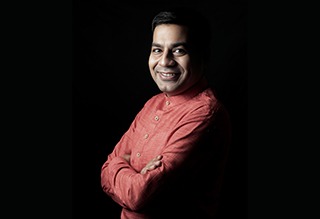 For Niraj Gera, Founder of Delhi-based NGO, Humanify Foundation, period equality begins with breaking the taboo surrounding menstruation and restoring dignity to a natural bodily process. He believes that the challenge goes beyond stigma and impacts ones emotions, self-esteem, and social integration.
“At Humanify Foundation, our mission is to normalize menstrual health conversations and restore dignity to every girl and woman. For far too long, menstruation in India has been surrounded by silence, shame, myths, and social restrictions. This not only impacts physical health but also affects confidence, emotional wellbeing, and equal participation in education and society,” he elaborates.
Niraj’s work addresses the problem’s core by creating a mindset shift. Going beyond awareness programs, Niraj took to story-telling through his photo documentary series titled “Sacred Stains”. Using impactful photographs, menstruation was showcased as a real-life experience.
“For us, period equity is not just about access to products—it is about dignity, inclusion, and ensuring that no girl feels less because of something so natural,” he said, emphasizing the need for both an emotional and a structural approach to the concept of equity.
Humanify Foundation’s Work in Practice:
The concept of period equity takes form through one of Humanify Foundation’s key initiatives, Happiness Express. “It is a nationwide movement through which I have conducted 475+ sessions across 24+ states, directly reaching over 1.4 lakh students and community members. These sessions integrate menstrual health awareness with mental health, gender sensitivity, and emotional wellbeing,” he added. Conducted across 24+ states, the program has reached over 1.4 lakh individuals.
Inclusivity makes the program unique. Boys and girls learn together to achieve mutual comprehension. As Niraj notes change happens only when everybody is part of the discussion.
Talking about the impact Niraj says, “The impact has been deeply visible. Students have shared how these sessions reduced shame, encouraged open dialogue, and changed long-held beliefs. Girls feel more confident, while boys become more empathetic and supportive. Many participants take these conversations back to their homes, creating a ripple effect in communities.”
Using this holistic approach, the NGO is not merely raising awareness; it is altering how menstruation is viewed in the society.
Can Menstrual Health Become a Gateway to Broader Awareness?
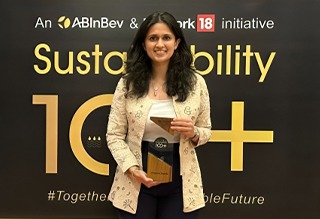 Social entrepreneurship expert Aradhana Rai Gupta approaches period equity from a holistic perspective. Her work as co-founder of Delhi and Mumbai based menstrual health focused organisation, Balla, connects menstruation to one’s general well-being, rights, and autonomy.
“At Baala, our core mission is to position menstrual health as an entry point into broader conversations on women’s health and sexual and reproductive health and rights,” she Aradhana. She believes that menstruation is not a standalone topic but an introduction to one’s body.
Aradhana points out an important missing link - access to accurate and non-stigmatizing information. Menstruation can be the very first biological transition that one encounters, but it remains shrouded in silence or misinformation. This could have far-reaching consequences on how one approaches issues such as contraception, healthcare, and bodily autonomy.
“Our work focuses on using menstrual health as a gateway to build deeper awareness and confidence around Sexual and Reproductive Health and Rights (SRHR). Through community-led education, capacity building, and partnerships, we create safe spaces where conversations can expand beyond periods to include bodily autonomy, consent, and health-seeking behaviour,” Aradhana explains.
Baala’s Work in Practice:
This idea is evident from the Balaa’s Menstrual Solidary Initiative (MSI) initiative, which emphasizes grassroots capacity-building. The organization does not hold one-off training; instead, it equips its partners with the skills to initiate dialogue within their communities.
“Partners are equipped with tools, curricula, and resources to conduct workshops, facilitate discussions, and distribute sustainable menstrual products within their communities. By embedding these conversations locally, we ensure they are contextual, continuous, and trusted,” says Aradhana.
MSI’s impact goes beyond surface-level awareness creation. “Our data and feedback mechanisms show not only improved menstrual health knowledge and product uptake, but also increased comfort in discussing related health topics that are often considered taboo,” she notes.
Baala and MSI’s success lie within this transition - moving from compartmentalized awareness to something more holistic, where menstruation can open doors to dignity, rights, and choice.
What Does It Take to Bridge Awareness, Access, and Policy?
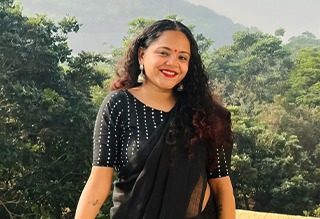 Arhita Biswas, the founder of Kolkata-based NGO, Spriha Society, understands that achieving true menstrual equality is possible only when certain structures are addressed.
“At Spriha Society, our core mission is to dismantle the systemic stigma and silence around menstruation,” says Arhita whose work focuses on menstrual health and gender awareness. For her, menstrual health is about gender justice and a public health concern. It is not a “women-only” issue; instead, it is related to education, workplaces, and societal engagement.
Spriha Society has identified challenges including lack of awareness, access and affordability of menstrual hygiene products, and lack of culture-sensitive policies. Arhita also talks about the exclusion of marginalized menstruators who are not cisgender women.
Spriha Society’s Work in Practice:
Spriha Society’s flagship initiative, “Let’s Talk About Periods” (LTAP), addresses these challenges through a combination of education, access, and advocacy. Arhita explains, “We conduct workshops in government-sponsored schools in Kolkata which discuss the biological process and the hormonal impact of menstruation, health, hygiene and period products.”
She further explains, “By providing an open platform to menstruators to discuss their lived experiences of menstrual stigma and challenges, we open up the conversation about what needs to change about menstrual health policies and strategies.”
LTAP has now so far impacted over 5,000 school-going menstruators, and over 300 adult menstruators in urban and peri-urban Kolkata and Sundarbans.
The impact, therefore, has not only been quantitative but qualitative. “Awareness of sustainable products jumped from 25–35% to 94–96%, and 100% of girls now see periods as normal,” says Arhita. Among adult participants, confidence levels have increased significantly, along with improved hygiene practices.
Besides the statistics, there has also been an observable change in behaviour, where improved school attendance rates, better utilization of sanitation facilities, and improved interaction among peers have been observed.
However, she is quick to point out that these gains are only the beginning. Achieving true period equity requires sustained, collective effort.
How Can Menstruation Be Reframed as a Health Indicator?
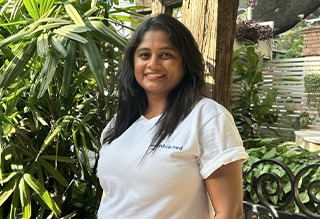 Taking the menstrual health conversation ahead is Bangalore-based NGO, Uninhibited that works towards improving gender equity, health and wellbeing of marginalised menstruators across India.
Sowmya Muniswamy, State Operations Lead – Karnataka further explains, “We believe that menstrual health is a critical indicator of overall health and well-being.” Uninhibited views menstrual health as more than a hygiene issue and works to achieve “dignity, knowledge, and confidence” for every menstruator.
Critical gaps include lack of information, stigmatization, inadequate involvement of men, and limited availability of healthcare services. These factors hinder individuals from recognizing their own bodily needs and react appropriately.
Uninhibited aims to restructure menstruation conversations to promote awareness about health issues. Through education and awareness about menstrual cycles, one can detect various diseases, including PCOS, PCOD, and anemia.
Uninhibited’s Work in Practice:
One of Uninhibited’s most successful programs is the menstrual helpline, which was started during the pandemic. Talking about the progress, Sowmya says, “What began as an urgent response has evolved into one of our most impactful innovations. The helpline creates a safe, non-judgemental and confidential space for girls to ask questions, share concerns, and seek guidance on menstrual and overall health.”
“To date, we have received over 100,000 calls, engagements and free tele consultation on menstruation, giving us direct insight into the lived realities of adolescents,” adds Sowmya. The helpline has helped in shifting the organisation’s approach from focusing solely on hygiene to recognizing menstrual health as a key indicator of overall well-being.
This enables Uninhibited to move beyond assumptions and design interventions based on real needs. This, coupled with programs such as the Period Fellowship, allows for stronger grassroots and systemic change.
In the process, Uninhibited has gone beyond simple period advocacy to incorporating it into the larger discourse of public health and wellness.
What Truly Drives Period Equity Forward?
Conversations with these social development experts indicate that period equity is not a one-off solution; instead, it is a multiple-layered challenge. Period equity is not simply about access to sanitary products — it is about dignity, freedom, health, and equal opportunity.
From Sania’s attempt to move menstruation “beyond the whisper” to Niraj’s emphasis on dignity, Aradhana’s incorporation of SRHR, Sowmya’s public health perspective, and Arhita’s call for structural changes, each perspective addresses an important aspect of the movement.
Collectively, they point toward a bigger shift – viewing menstruation as not something to be ashamed of but as a natural bodily function.
As India moves forward, menstruation must no longer be treated as a source of shame or limitation. True progress will come when every menstruator can go to school, work, seek healthcare, and live without their periods standing in the way of their rights, choices, or future.
Current Issue
Most Viewed
- 1 Talented Indian Female Actors Who Also Moonlight as Successful Producers
- 2 7 Indian Female Podcasters You Must Know About
- 3 7 Powerful Independent Indian Women Journalists Who are Voices of Change
- 4 Ruchikaa Kapoor Sheikh: The Creative Mind Behind Netflix India's Popular Shows
- 5 7 Most Influential Women Educators India has had over the Years
- 6 11 Breakthrough Female Faces Ruling the Indian OTT Platforms
- 7 8 Timeless Female Indian Classical Dancers & their Legacy
- 8 Women's Health Startup HerMD Closing Doors Amid Industry Challenges
- 9 Real Meets Reel: A List of 11 Indian Movies based on Real Women
- 10 Rasha Hassan: A Visionary Leader On A Mission To Transform Dubai's Real Estate Landscape
- 11 5 Indian Women-led IPOs You Must Know About
- 12 11 of the Most Iconic 21st Century Women to become "The First Indian Woman"
- 13 India's 7 Funniest Women Stand-Up Comics You Must Follow
- 14 Aparna Purohit : Leading India's Most Popular OTT Platforms
- 15 How Leaders Can Balance Risk & Innovation in Today's Banking Landscape
- 16 Dr. K. Shilpi Reddy: Sculpting Healthier Futures For The Next Generation With Reforms In Obstetrics Care
- 17 Sylvia Dcosta: A Visionary Business Leader Pushing The Limits And Setting High Professional Standards
- 18 Top 5 All-Rounder Women Cricketers of India
- 19 How Tata AIA is Empowering Women with Insurance That Understands Their Needs