
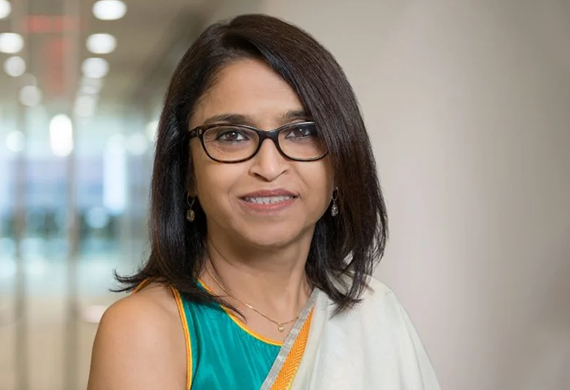

Achal is the CEO of the Society for Human Resource Management (SHRM) in India and the Asia Pacific and MENA region. As a women leader, Achal is enthusiastic about women's empowerment, work culture, and leadership. she comes armed with over three decades of global leadership experience, driving growth, building inclusive workplaces, and shaping HR and business ecosystems across APAC and MENA.
For decades, many women stepping into leadership roles received advice that sounded helpful on the surface but carried a deeper message underneath: adjust yourself; be firmer; be less emotional; speak with more authority; don’t hesitate; and command the room.
What this really meant was simple -- leadership already had a template, and that template wasn’t built with women in mind.
So, women adapted. They learned to navigate rooms that weren’t designed for them. They balanced confidence with caution. They often carried the added burden of proving competence without appearing “too strong” or “too soft.” It was exhausting, but it worked. Many rose to the top.
But here’s the question we should be asking now: was that template ever right to begin with? To understand this, we have to look at where our idea of leadership came from.
In the industrial era, organisations were structured like factories; clear hierarchies; clear lines of command; clear metrics — output, speed, efficiency. Leadership in that environment rewarded decisiveness, control and authority. The person at the top gave direction; others executed. It was a system built for predictability.
Even as we moved into the digital age, much of that thinking stayed intact. Speed replaced stability, but command-and-control behaviours remained. Leaders were expected to dominate conversations, make quick calls and stay highly visible. Long hours signalled commitment. Aggression was often confused with drive.
That model worked for a time. But today, we are operating in a very different world. AI is handling repetitive tasks. Teams are hybrid, distributed across cities and continents. Problems are complex, layered and often ambiguous. No single leader has all the answers.
In this environment, the traits that once defined leadership are no longer enough.
Now, emotional intelligence is not optional. Leaders must understand people who may never sit in the same room. Collaboration is not a sign of weakness; it is how innovation happens across functions. Ethical clarity is critical in an age where AI decisions can affect livelihoods and reputations. Psychological safety determines whether teams speak up or stay silent. Adaptability matters more than rigid certainty.
And suddenly, the qualities that were once labelled as “soft” are becoming central to performance.
Many women leaders have long leaned into these strengths -- sometimes by instinct, sometimes by necessity. They’ve built influence through relationships. They’ve balanced ambition with empathy. They’ve navigated complexity with patience. Yet for years, they were encouraged to fit into older leadership moulds rather than reshape them.
That reshaping is now overdue.
If the world of work has evolved, then our performance metrics must evolve too. It is no longer enough to measure leaders solely on revenue growth or cost control. Those matter, of course. But what about team engagement? Retention in a hybrid world? Ethical decision-making in AI systems? The ability to build trust across diverse groups?
If we don’t measure these, we don’t value them.
Boards and CHROs have a powerful role to play here. They decide what gets rewarded. If leadership benchmarks continue to favour visibility over substance or decisiveness over dialogue, the cycle continues. But if evaluation frameworks expand to include collaboration quality, inclusion, adaptability and ethical governance, behaviours will shift.
Coaching is another piece of the puzzle. In the past, coaching was sometimes seen as remedial. Today, it should be structural. Leaders navigating AI disruption, global teams and cultural change need space to reflect. They need support in unlearning habits shaped by outdated systems. Coaching creates that space. It helps leaders grow into what the future requires, rather than cling to what the past rewarded.
Importantly, this conversation is not about saying women lead better. It’s not about replacing one stereotype with another. It’s about acknowledging that leadership itself must be redefined.
The intelligent era does not reward dominance. It rewards discernment. It does not reward isolation at the top. It rewards integration across teams. It does not reward rigid certainty. It rewards the ability to pivot thoughtfully.
Women do not need to imitate an old leadership script anymore because that script is losing relevance. The future is not asking women to adjust -- it is asking organisations to rethink what strength looks like.
This is not a diversity conversation. It is a business conversation.
Enterprises that cling to industrial-era definitions of leadership risk falling behind in an AI-driven, knowledge-based economy. Those that redesign leadership around collaboration, trust and ethical clarity will remain relevant.
Leadership redesign is not about inclusion for its own sake. It is about aligning capability with reality.
The most successful organisations in the coming decade will not necessarily be led by the loudest voices in the room. They will be led by those who can listen deeply, decide wisely and build environments where others thrive.
And perhaps, finally, women stepping into leadership will no longer be told to adapt to the system. Instead, they will help define what the system becomes.
Current Issue
Most Viewed
- 1 Talented Indian Female Actors Who Also Moonlight as Successful Producers
- 2 7 Indian Female Podcasters You Must Know About
- 3 7 Powerful Independent Indian Women Journalists Who are Voices of Change
- 4 Ruchikaa Kapoor Sheikh: The Creative Mind Behind Netflix India's Popular Shows
- 5 7 Most Influential Women Educators India has had over the Years
- 6 11 Breakthrough Female Faces Ruling the Indian OTT Platforms
- 7 8 Timeless Female Indian Classical Dancers & their Legacy
- 8 Women's Health Startup HerMD Closing Doors Amid Industry Challenges
- 9 Real Meets Reel: A List of 11 Indian Movies based on Real Women
- 10 Rasha Hassan: A Visionary Leader On A Mission To Transform Dubai's Real Estate Landscape
- 11 5 Indian Women-led IPOs You Must Know About
- 12 11 of the Most Iconic 21st Century Women to become "The First Indian Woman"
- 13 India's 7 Funniest Women Stand-Up Comics You Must Follow
- 14 Aparna Purohit : Leading India's Most Popular OTT Platforms
- 15 How Leaders Can Balance Risk & Innovation in Today's Banking Landscape
- 16 Dr. K. Shilpi Reddy: Sculpting Healthier Futures For The Next Generation With Reforms In Obstetrics Care
- 17 Sylvia Dcosta: A Visionary Business Leader Pushing The Limits And Setting High Professional Standards
- 18 Top 5 All-Rounder Women Cricketers of India
- 19 How Tata AIA is Empowering Women with Insurance That Understands Their Needs


