
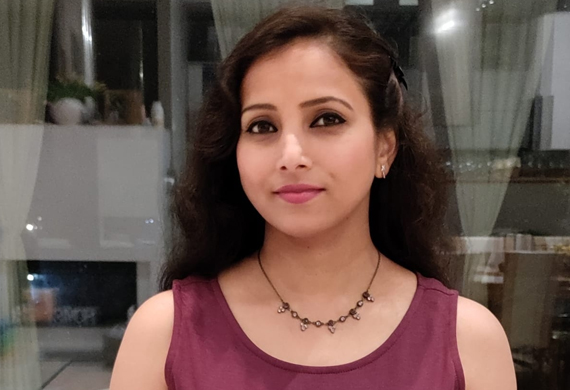

DISCLAIMER: All views expressed here in this interview are my own opinions and suggestions and not related to my company Astra Zeneca.
Dr Vidya Velagapudi has an interdisciplinary educational and professional background. She has been working in cross-functional life sciences in different areas, in academics, CROs and industries. She is a passionate biomedical researcher with over 15 years of experience and a strong R & D background in metabolism, biomolecular discovery, translational science and precision medicine. She has also claimed significant awards, fellowships, competitive grants and has played a key role in her field both at the national and the international levels. She is also an expert evaluator for example in horizon 2020 funding proposals, Marie Curie Post-doc fellowships etc. She is a guest editor and reviewer for reputed scientific journals. She has also appeared in various news articles and press releases in different media and has published 70 scientific articles in reputed journals. Moreover, she has also taught medical and PhD students. She has been actively involved in bridging the academia, pharmaceutical, and biotechnology industries.
The Women Entrepreneur caught up with Vidya in a candid conversation on her views and opinions about the Indian pharmaceutical industry. Here are some snippets from the conversation.
Throw some light on the growth of the pharmaceutical industry in the past couple of years. In your opinion what have been some of the important market forces that have impacted the growth of the pharmaceutical industry in the Indian context?
India is the largest provider of generic drugs globally and enjoys an important position in the global pharmaceutical sector. India also has a large pool of scientists with the potential to push the industry to greater heights through initiatives such as Self-Reliant India. Private investments should be encouraged and can be used in the direction of manufacturing several pharmaceutical ingredients domestically while generating more opportunities for the local talent pool and thus significantly enhancing the sector growth.
India is heavily dependent on imported active pharmaceutical ingredients (APIs), especially from China. This is one of the most critical factors impacting the said growth. Funding should be utilised to encourage the production of APIs domestically, reducing the production costs and baling us out of the vulnerable situation that we are all facing currently in terms of various imports. India can also encourage a large set of small players and focus on improved production as well as better quality. Creating a supply chain ecosystem is another important initiative to achieve the decided growth rate in the next five years. Encouraging small-medium enterprises (SMEs), providing tax benefits to them, relaxing rules and regulations for investors, creating funding opportunities and socio-economic stability throughout India are some of the key issues that should be addressed to have a greater impact.
What are some of the most critical challenges that the Indian pharmaceutical industry is facing and also what impact has the pandemic had on the industry in the past 2 years?
Infrastructural challenges are of primary concern lately which are only available to a tiny portion of the entire population. A series of SMEs can mobilise locally and serve as an integral part of the large supply chain network. The strengthening to scale up and become competitive in the long run is a huge challenge.
The Covid 19 crisis has exposed the unpreparedness of various countries across the globe. India being a large nation with a huge population had to bear the wrath of the covid 19 pandemic. This has also helped India to gather strength and propel itself to become self-reliant.
What are some of the key leadership philosophies or mantras that you follow to grow your growth trajectory within your industry and also to make the team that you are a part of?
I have been in the leadership role for over a decade where I led people with diverse educational and professional backgrounds. Mostly I follow transformational and participative leadership styles where I make sure that all my team members have a clear vision, so that we all can work towards achieving our common goal. Inclusivity is the most important aspect for me. I often conduct, brainstorming sessions with my team to take everybody’s opinion into account while making decisions as everyone’s contribution is important and valuable. I also encourage transparency and speak up culture. While recruiting for, example, I take diversity into account which helps in developing a creative team. Another important aspect is adaptability which is the important trait that I possess which helped in adjusting to the new-normal working culture during this pandemic situation. I am against micro-managing people. I give freedom to my team so that they can make decisions in their day to day lab operations. I also support individual development plans for everyone in my team irrespective of their career level. I have successfully developed high performing team. I always make sure that I develop people continuously.
As we go into higher roles women’s representation decreases. What’s your take on this disproportionate representation of women within the top leadership roles across the industries and geographies?
Women make half of the population but numeration equality does not get operated at every level. There are more women at the lower levels compared to the higher executive roles. Women have been discharging a multitude of responsibilities but unfortunately, this innate multitasking ability has been limited to certain chores only. We should capitalize and invest in these inherent qualities in women to build the next generation. In my opinion, each organisation and institute should have a key vision and target for diversity and inclusion factors. Government sectors should also look for female leaders to lead various institutes or chair research counsels in all the fields. This kind of progressive thinking and trend should be a new normal at all organisations across the world. I have been actively advocating for women in STEM and also in senior leadership roles by participating in several panel discussions.
As a leader were there any specific role models that you grew up idolising or who have an impact on you as a leader?
I don’t think that my role model should be only women. So it does not matter whether they are males or females. So I would not say just one but there are so many global leaders whom I follow regularly on social media. I always learn from these global leaders. In school, all my science teachers have inspired me to take my career in science.
Current Issue
Most Viewed
- 1 Talented Indian Female Actors Who Also Moonlight as Successful Producers
- 2 7 Indian Female Podcasters You Must Know About
- 3 7 Powerful Independent Indian Women Journalists Who are Voices of Change
- 4 Ruchikaa Kapoor Sheikh: The Creative Mind Behind Netflix India's Popular Shows
- 5 7 Most Influential Women Educators India has had over the Years
- 6 11 Breakthrough Female Faces Ruling the Indian OTT Platforms
- 7 8 Timeless Female Indian Classical Dancers & their Legacy
- 8 Women's Health Startup HerMD Closing Doors Amid Industry Challenges
- 9 Real Meets Reel: A List of 11 Indian Movies based on Real Women
- 10 Rasha Hassan: A Visionary Leader On A Mission To Transform Dubai's Real Estate Landscape
- 11 5 Indian Women-led IPOs You Must Know About
- 12 11 of the Most Iconic 21st Century Women to become "The First Indian Woman"
- 13 India's 7 Funniest Women Stand-Up Comics You Must Follow
- 14 Aparna Purohit : Leading India's Most Popular OTT Platforms
- 15 How Leaders Can Balance Risk & Innovation in Today's Banking Landscape
- 16 Dr. K. Shilpi Reddy: Sculpting Healthier Futures For The Next Generation With Reforms In Obstetrics Care
- 17 Sylvia Dcosta: A Visionary Business Leader Pushing The Limits And Setting High Professional Standards
- 18 Top 5 All-Rounder Women Cricketers of India
- 19 How Tata AIA is Empowering Women with Insurance That Understands Their Needs


