
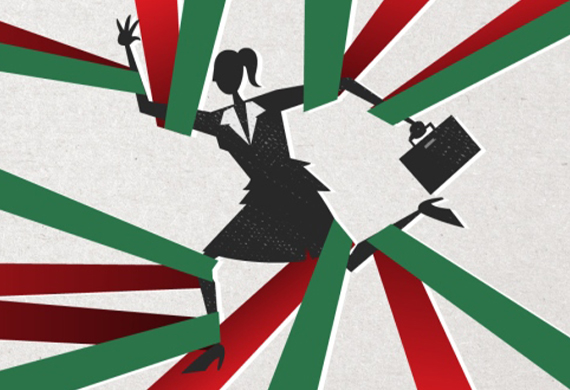

The pandemic has disproportionately affected women and their employment more than men. Women in India have unfortunately been the first to lose their jobs during the pandemic and the last to restore them. Due to school closures, some adults have left the workforce to care for children who would otherwise be in school. Young women, who were unable to study, train, or work as a result of the pandemic were married off instead. This is a troubling trend. Women in India leave the workforce when they are burdened with a spouse, but women in other countries leave the workforce when they are burdened with a kid.
The argument says that it is their option whether or not Indian women work outside the home. Dropping out of the labour force is a status symbol for upwardly mobile households, showing that they can make ends meet exclusively on their spouse's earnings. The scarcity of working women in India, however, is not simply attributable to cultural preferences. Many women who are on the economic side-lines are not doing so voluntarily. Furthermore, contrary to popular belief, Indians are not as hostile to working women as employment statistics suggest. The proportion of women who find work in India is slightly lower than in Saudi Arabia, where 22 percent do. And, insofar as social attitudes do constrain women, they are not fixed. Indeed, rather than being a by-product of social enlightenment, women's employment is frequently a catalyst for it.
Nykaa, an Indian cosmetics company founded by a woman entrepreneur, Falguni Nayar, has recently made news for its successful stock market debut. Many more Indian women, such as Nykaa's Nayar, have successfully entered the start-up sector and now hold senior corporate positions in banking, information technology, and other fields. For the past 50 years, India has had a female prime minister, a female president, and several female state chief ministers. Gender norms for common women in India, on the other hand, remain strong, influencing both men and women's behaviour, according to existing research.
Single Women Work more than Married Women in India
According to the Economic Survey 2017-18, India has one of the lowest female labor-force participation rates in South Asia, at just 24%. According to a World Bank report published in April 2017, 19.6 million women disappeared from the labour force in the decade preceding the 2011 census.
Women who are single are an exception to the general trend of women exiting the labour force. Single women, whether divorced or never married, widowed or abandoned, and whether they live in villages or cities, must work to support themselves and their children. The number of single women — widowed, never married, divorced, and abandoned – grew by 39% from 51.2 million in 2001 to 71.4 million in 2011.
Female labour force participation rates among women aged 15 and up in India are as low as 26.4% in rural regions and 20.4% in urban areas, according to the Periodic Labour Force Survey 2018-19. Women's unemployment is caused by a combination of supply and demand issues, such as the weight of family duties, particularly reproductive tasks, as well as a lack of suitable and relevant job prospects.
According to studies, women are willing to work, contradicting the assumption that cultural barriers restrict women from working outside the home. Unemployment is highest among women with a secondary or higher education (i.e., those looking for job but unable to obtain it) (17%; this is higher among young women at 26%).
In recent years, India has seen the largest proportion of single women in its history.
Indian Women Quit Job after Marriage
The ratio of working-age Indian women in the workforce has decreased by 10% in India. Indian women are quitting occupations at an alarming rate, either due to a lack of ability to reconcile personal and professional lives, or due to pressure from family and in-laws who believe married women should leave their careers after marriage. Lack of support from family and spouse is the primary cause of this decline. After marriage, the majority of women leave their jobs. This is done on purpose in certain cases, but most of the time due to pressure from home to leave their vocation. The working hours of married women are frequently a source of contention for in-laws, spouses, or both. Women are expected to return home by 6:30 p.m. and help with domestic tasks. Staying out till late is frowned upon, and it is almost uncommon for a woman to do so.
Some women find it difficult to persuade their relatives and partners. While Indian women are becoming more self-sufficient, they continue to lack autonomy.
Another disadvantage is that married working women are more likely to be victims of domestic violence due to a combination of two factors: backlash from their spouses and women's own guilt over working outside the home, which leads to a higher proportion of married working women accepting and justifying domestic violence.
Perhaps the best hope for changing attitudes toward gender norms is to intervene in the early stages of life, particularly during adolescence. Only then will many young women in India have more options for how they wish to live their lives.
The best thing the government can do to enhance the supply of female workers is to increase the overall demand for labour. If development is rapid, hiring is strong, and labour is scarce, employers will have a strong incentive to draw more women into the workforce by offering greater pay and safer, more convenient employment. Unfortunately, India's renowned red tape has hindered the expansion of labour-intensive, female-friendly industries such as Bangladesh's garment industry. To the extent that the government of India strives to stimulate private employment, it favours prestige businesses that are unlikely to hire the masses. Furthermore, the government's hiring practises are extremely sexist: women make up only 11% of the central government's workforce.
Current Issue

Most Viewed
- 1 Talented Indian Female Actors Who Also Moonlight as Successful Producers
- 2 7 Indian Female Podcasters You Must Know About
- 3 7 Powerful Independent Indian Women Journalists Who are Voices of Change
- 4 Ruchikaa Kapoor Sheikh: The Creative Mind Behind Netflix India's Popular Shows
- 5 7 Most Influential Women Educators India has had over the Years
- 6 11 Breakthrough Female Faces Ruling the Indian OTT Platforms
- 7 8 Timeless Female Indian Classical Dancers & their Legacy
- 8 Women's Health Startup HerMD Closing Doors Amid Industry Challenges
- 9 Real Meets Reel: A List of 11 Indian Movies based on Real Women
- 10 Rasha Hassan: A Visionary Leader On A Mission To Transform Dubai's Real Estate Landscape
- 11 5 Indian Women-led IPOs You Must Know About
- 12 11 of the Most Iconic 21st Century Women to become "The First Indian Woman"
- 13 India's 7 Funniest Women Stand-Up Comics You Must Follow
- 14 Aparna Purohit : Leading India's Most Popular OTT Platforms
- 15 How Leaders Can Balance Risk & Innovation in Today's Banking Landscape
- 16 Dr. K. Shilpi Reddy: Sculpting Healthier Futures For The Next Generation With Reforms In Obstetrics Care
- 17 Sylvia Dcosta: A Visionary Business Leader Pushing The Limits And Setting High Professional Standards
- 18 Top 5 All-Rounder Women Cricketers of India
- 19 How Tata AIA is Empowering Women with Insurance That Understands Their Needs


