
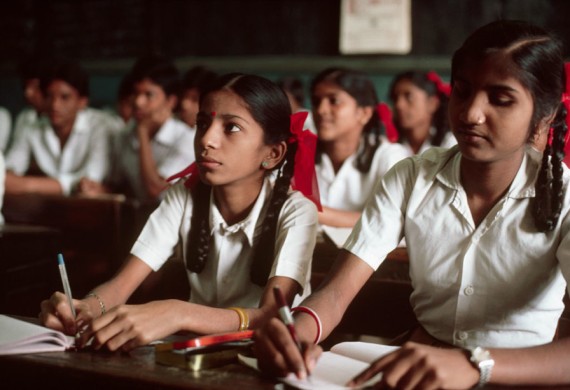

The Rs. 1,000 cash incentive provided to female students pursuing higher education under the Moovalur Ramamirtham Ammaiyar Higher Education Assurance Scheme will be credited to their bank accounts via Direct Benefit Transfer (DBT) on the seventh of every month; recipients don't need to wait until the end of their undergraduate programme to withdraw the money.
The higher education department should verify the students' continued education once every six months on June 30 and December 31, according to a recent G.O. issued by Shambu Kallolikar, Additional Chief Secretary, Social Welfare and Women Empowerment Department. The nodal officer for carrying out the scheme is the Director of the Social Welfare Department.
The State government has changed the Moovalur Ramamirtham Ammaiyar-named marriage support programme into a higher education assurance programme in an effort to encourage ladies to enrol in higher education.
A monthly incentive of $1,000 is available to girl students who attended public schools for grades 6 through 12 under the amended programme, as long as they continue their college studies without taking a gap. The project received '698 crore in funding year 2022–23.
The G.O. stated that the State-level bankers' committee and lead banks in districts should make sure that students who take advantage of the benefit are given bank accounts with no balance and no embellishments. The ruling stated that "debit cards should be made available to the students."
According to Kallolikar, the entire scheme's implementation, from enrolling pupils to disbursing cash benefits to them, should be done online. The G.O. states that the financial incentive is available to female students taking courses in the arts and sciences, professional fields, paramedicine, diplomas, ITIs, and integrated post-graduate programmes.
Only the first three years of the combined PG programme will be eligible for the incentive. Students from other countries and those doing their undergraduate degrees online are ineligible. There is no limit on the number of girl children per family that can enrol in the programme, according to Kallolikar, unlike the marriage support programme. The incentive for seeking higher education is available to any number of girl children from the same household, he said.
Under the Thalikku Thangam programme, women from low-income households received eight grammes of gold and Rs 50,000 in cash for marriage if they had earned a degree or diploma, and Rs 25,000 for those who had earned their SSLC and Class 12 diplomas.
Current Issue
Most Viewed
- 1 Talented Indian Female Actors Who Also Moonlight as Successful Producers
- 2 7 Indian Female Podcasters You Must Know About
- 3 7 Powerful Independent Indian Women Journalists Who are Voices of Change
- 4 Ruchikaa Kapoor Sheikh: The Creative Mind Behind Netflix India's Popular Shows
- 5 7 Most Influential Women Educators India has had over the Years
- 6 11 Breakthrough Female Faces Ruling the Indian OTT Platforms
- 7 8 Timeless Female Indian Classical Dancers & their Legacy
- 8 Women's Health Startup HerMD Closing Doors Amid Industry Challenges
- 9 Real Meets Reel: A List of 11 Indian Movies based on Real Women
- 10 Rasha Hassan: A Visionary Leader On A Mission To Transform Dubai's Real Estate Landscape
- 11 5 Indian Women-led IPOs You Must Know About
- 12 11 of the Most Iconic 21st Century Women to become "The First Indian Woman"
- 13 India's 7 Funniest Women Stand-Up Comics You Must Follow
- 14 Aparna Purohit : Leading India's Most Popular OTT Platforms
- 15 How Leaders Can Balance Risk & Innovation in Today's Banking Landscape
- 16 Dr. K. Shilpi Reddy: Sculpting Healthier Futures For The Next Generation With Reforms In Obstetrics Care
- 17 Sylvia Dcosta: A Visionary Business Leader Pushing The Limits And Setting High Professional Standards
- 18 Top 5 All-Rounder Women Cricketers of India
- 19 How Tata AIA is Empowering Women with Insurance That Understands Their Needs


