


Engineering has long been regarded as one of the most powerful drivers of economic growth, technological advancement, and social progress. Yet, for decades, women remained largely absent from engineering classrooms, laboratories, factories, and leadership positions. Today, however, India is witnessing a remarkable transformation. Women now account for nearly 43 percent of STEM graduates in the country, one of the highest shares globally. Despite this achievement, only a small percentage eventually enter engineering and manufacturing careers, highlighting a significant gap between education and employment.
At a time when India is accelerating investments in advanced manufacturing, artificial intelligence, semiconductors, renewable energy, and digital infrastructure, the participation of women engineers has become more critical than ever. Their growing presence is not only helping organisations address talent shortages but also bringing diverse perspectives that enhance innovation, creativity, and problem-solving.
On the occasion of International Women in Engineering Day (INWED) on June 23, the global engineering community is celebrating this year's theme, #EngineeringIntelligence, which shines a spotlight on women shaping artificial intelligence, data-driven technologies, and the future of engineering innovation.
On this International Women in Engineering Day, the Women Entrepreneurs Review Team highlights the inspiring rise of women engineers in India, the challenges they have overcome, and the influence they continue to wield across industries.
What is International Women in Engineering Day?
 International Women in Engineering Day (INWED) is a global awareness campaign celebrated annually on June 23 to recognise the achievements, contributions, and leadership of women engineers worldwide. The initiative aims to raise the visibility of women working across engineering disciplines while encouraging girls and young women to explore careers in science, technology, engineering, and mathematics (STEM).
The day serves as a platform to showcase role models, celebrate breakthroughs, and address the persistent gender imbalance within engineering professions.
Why Was International Women in Engineering Day Launched?
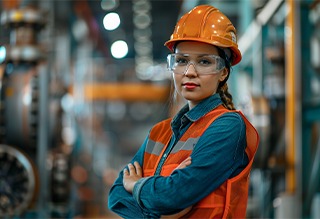
International Women in Engineering Day was launched in 2014 by the Women's Engineering Society (WES) in the United Kingdom as part of its 95th anniversary celebrations. The initiative emerged from a growing recognition that women remained significantly underrepresented in engineering despite making substantial contributions to the profession.
The campaign quickly gained momentum due to its ability to spotlight women's achievements while encouraging greater participation in engineering careers. In 2017, the initiative expanded into a global movement with support from international organisations, including UNESCO.
The primary objectives behind the launch were:
- Increasing the visibility of women engineers.
- Encouraging young girls to pursue STEM education.
- Addressing gender disparities in engineering professions.
- Creating mentorship and networking opportunities.
- Promoting inclusive workplaces and leadership pathways.
More than a decade later, these goals remain as relevant as ever as industries continue striving for greater diversity and inclusion.
What is the Theme of International Women in Engineering Day 2026?
 The theme for International Women in Engineering Day 2026 is #EngineeringIntelligence, which reflects the evolving nature of engineering in a technology-driven world. The theme celebrates women engineers who are advancing fields such as artificial intelligence, machine learning, data science, cybersecurity, robotics, autonomous systems, quantum computing, telecommunications, and smart manufacturing.
As engineering increasingly intersects with digital intelligence, women are playing a vital role in designing technologies that are ethical, inclusive, and impactful. The theme also underscores the importance of ensuring diverse voices contribute to the development of emerging technologies that will shape future societies.
Women in Manufacturing: How Workplace Structures Can Evolve for Greater Female Participation

While India produces a strong pipeline of women STEM graduates, a significant gap remains between education and employment in manufacturing and engineering. According to Nikita Kumawat, Co-Founder & Executive Director of electronics manufacturing firm, Brandworks Technologies, a meaningful change requires organisations to rethink workplace structures and create environments where women can build long-term careers.
"Women bring strong ambition to STEM; what really shapes their career path is the environment they step into once they arrive. Manufacturing has long been built around shop floors, shift structures, and safety infrastructure designed without women in mind, and a visible shortage of women in technical and plant leadership sends an unspoken message that this isn't a long-term career path,” says Nikita.
As co-founder, Nikita has ensured that over 70% of the factory workforce at Brandworks Technologies is female. She explains, “We deliberately built our processes and culture around inclusion rather than treating it as an afterthought”.
Nikita says that increasing the number of women entering engineering is only one part of the equation. Organisations must also focus on retention, leadership development, and structured career progression to ensure women advance into decision-making roles.
She says, "Attracting women usually begins with intent, which means actively recruiting from technical institutes and making it clear that engineering and shop-floor roles are genuinely open to them. Retention depends on infrastructure and policy, such as flexible hours, safe transport and facilities, and a culture where women aren't the exception on the floor. Advancement is where most organisations fall short - without structured mentorship in decision-making roles, women often hit a ceiling in mid-level technical positions.
At Brandworks, we've built pathways where women lead across engineering, quality, and production, treating leadership exposure as a deliberate, intentional investment. Organisations should track representation across every level of the organisation and hold leadership accountable for closing the gap. When women see other women leading technical teams and shaping product decisions, ambition follows naturally. One of the ways we've put this into practice is by addressing the advancement gap at its root - through an Electronics Manufacturing Skills Enhancement Centre that empowers women through structured training and upskilling from Operator to Staff and Engineering roles, creating a future-ready and inclusive workforce for the electronics manufacturing industry. The centre focuses on Surface Mount Technology (SMT) Operations, PCB Assembly and Testing, Quality Management, Manufacturing Processes and Lean Practices, Production Planning and Process Control, ESD and Safety Standards, as well as communication and leadership skills."
From Underrepresentation to Innovation: A Woman Engineer's Journey Through India's Technology Evolution
 The transformation of women's participation in engineering becomes evident when viewed through the experiences of professionals who entered the field decades ago. Preeti Agarwal, CTO & Co-Founder, SecureThings.ai, her journey reflects both the challenges and opportunities that have shaped the profession.
"Back in the 90s, when I was a student of Engineering, there were only four female students in my class of 40, indicating the underrepresentation of women in the field. Back then, with only a few software MNCs in India, career and growth opportunities were limited. I was lucky to get my first job opportunity at a tier 1 company in 2002. The journey was rocky, and I had to stand tough to stay in the game and succeed. After 20 years of experience, I co-founded SecureThings - an Automotive Cybersecurity startup."
As the theme #EngineeringIntelligence highlights the role of women in shaping the future of technology, engineering remains at the centre of innovation across artificial intelligence, cybersecurity, mobility, telecommunications, and next-generation computing.
"Today, Engineering is the best career option for anyone. What is better than using cutting-edge technology to invent the future? From Quantum computing, generative AI, ML, 5G networks, and autonomous vehicles. The future for engineering is absolutely promising, with the increasing technological demands across all sectors. Today and in the future, men and women engineers must work hand in hand to answer the needs of the World. Happy Engineers Day!"
The Rise of Women Engineers in India Is Reshaping the Industry

Women's growing influence across engineering disciplines is creating new opportunities for innovation, leadership, and industry transformation. Their contributions are helping redefine what engineering leadership looks like in modern India.
Gunjan Malhotra, Director, Komaki Electric Vehicle Division, says, "The ascent of Indian women in the engineering sector is a testament to their unwavering dedication and brilliance. They have embraced the challenges and soared above them, proving that gender is no barrier when it comes to innovation and excellence. Their diverse perspectives, tenacity, and groundbreaking work drive technological advancements and transform the engineering landscape."
The impact of women in engineering extends far beyond workplaces and technical innovation. Their success is helping shape a more inclusive society while encouraging future generations to pursue careers without limitations.
"What's most inspiring is the broader societal impact of their rise. It signifies a shift towards a more inclusive and equitable society, where opportunities are boundless, and the job market is speedily embracing inclusivity to address discriminatory issues. This journey is not just about individual success but a collective triumph, a reflection of the changing narrative in India. It's a story of empowerment, resilience, and hope, showing the world that Indian women are rising to conquer new horizons, leading the way into a future where gender disparities are a thing of the past and the reign of talent and determination is absolute."
Encouraging Girls to Pursue Engineering Careers from an Early Age
 Jayita Sengupta, Co-Founder & COO, TreisTek India, talks about building a more diverse engineering workforce, which starts with challenging stereotypes early and encouraging girls to envision themselves as future innovators, creators, and problem-solvers.
"Engineering is widely regarded as a male-dominated field. When it comes to choosing a stream such as civil, mechanical, or electrical engineering, women often hear things like ‘this field is not for you.’ The skewed gender inequality in the sector is still insufficient to dissuade women from pursuing engineering careers. All girls who want to pursue a career in civil engineering should not be discouraged. If one has the aptitude, nothing can stop them from attaining their goal,” says Jayita.
Conclusion: From Entry to Influence
The story of women in Indian engineering is no longer solely about gaining access to classrooms, laboratories, and workplaces. It is increasingly a story of influence, leadership, innovation, and transformation.
Women engineers are leading manufacturing units, founding deep-tech startups, advancing artificial intelligence, strengthening cybersecurity, driving electric mobility, and shaping the technologies that will define the future. Yet, significant work remains to ensure that the journey from STEM education to engineering leadership becomes smoother and more accessible for every aspiring woman engineer.
Talking about the practical steps that can help improve women’s representation in engineering, Nikita says, “What needs to change is structural - redesigned infrastructure, flexible shift policies, safe and accessible facilities, and above all, visible women in senior technical roles. Representation at the top changes perception at the entry level - women need to see this is a place they can grow, not just join."
As the world celebrates International Women in Engineering Day 2026 under the banner of #EngineeringIntelligence, the focus must shift from merely increasing participation to empowering women to lead, innovate, and shape the future of engineering. The next chapter of Indian engineering will not simply include women; it will be defined by their contributions, expertise, and influence.
Current Issue

Most Viewed
- 1 Talented Indian Female Actors Who Also Moonlight as Successful Producers
- 2 7 Indian Female Podcasters You Must Know About
- 3 7 Powerful Independent Indian Women Journalists Who are Voices of Change
- 4 Ruchikaa Kapoor Sheikh: The Creative Mind Behind Netflix India's Popular Shows
- 5 7 Most Influential Women Educators India has had over the Years
- 6 11 Breakthrough Female Faces Ruling the Indian OTT Platforms
- 7 8 Timeless Female Indian Classical Dancers & their Legacy
- 8 Women's Health Startup HerMD Closing Doors Amid Industry Challenges
- 9 Real Meets Reel: A List of 11 Indian Movies based on Real Women
- 10 Rasha Hassan: A Visionary Leader On A Mission To Transform Dubai's Real Estate Landscape
- 11 5 Indian Women-led IPOs You Must Know About
- 12 11 of the Most Iconic 21st Century Women to become "The First Indian Woman"
- 13 India's 7 Funniest Women Stand-Up Comics You Must Follow
- 14 Aparna Purohit : Leading India's Most Popular OTT Platforms
- 15 How Leaders Can Balance Risk & Innovation in Today's Banking Landscape
- 16 Dr. K. Shilpi Reddy: Sculpting Healthier Futures For The Next Generation With Reforms In Obstetrics Care
- 17 Sylvia Dcosta: A Visionary Business Leader Pushing The Limits And Setting High Professional Standards
- 18 Top 5 All-Rounder Women Cricketers of India
- 19 How Tata AIA is Empowering Women with Insurance That Understands Their Needs


